 Save
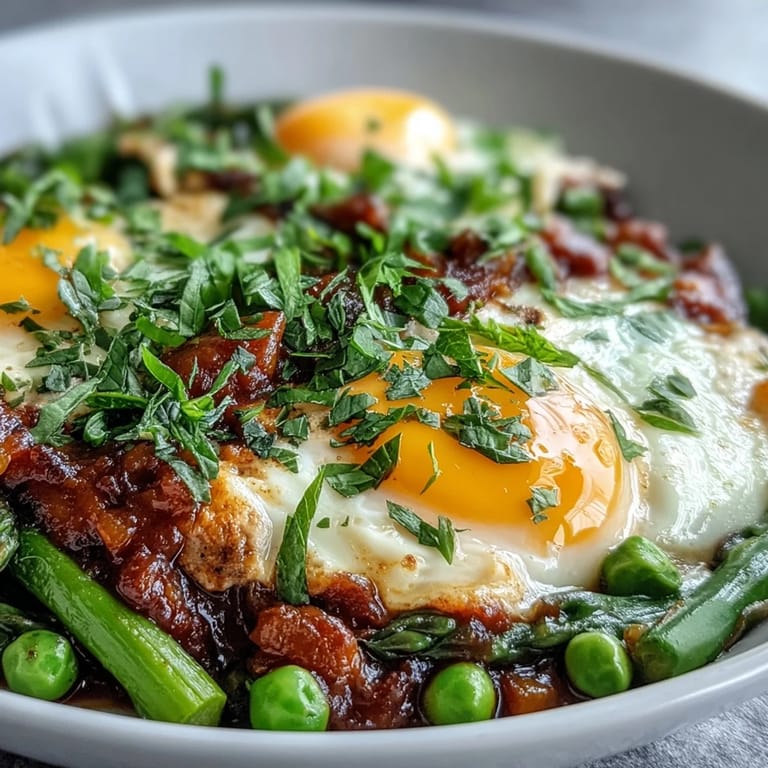
Save Last spring, I was standing in my kitchen on a Tuesday morning when my neighbor knocked with a basket of fresh broad beans from her garden. The pods were still warm from the sun, and something about their weight in my hands made me want to cook something that felt like celebration. That's when shakshuka came to mind—that forgiving, soulful dish where you can toss whatever vegetables you have into a bubbling tomato sauce and let eggs nestle into the warmth. This version, with its tender peas, creamy broad beans, and wispy asparagus, turned into something I now make whenever I need to feed people and feel good about it.
I'll never forget watching my eight-year-old nephew carefully crack an egg into one of the sauce wells I'd made, his tongue poking out in concentration as the white began to set. He'd never eaten shakshuka before, and by the time we pulled the pan from the stove, he was already asking when we could make it again. That's when I knew this recipe had staying power—when it becomes the thing people ask for, the thing they remember at the dinner table months later.
Ingredients
- Olive oil: Use a decent quality oil here since it's going into the sauce and you'll taste it—nothing fancy, just something you'd actually pour over bread.
- Onion: One medium onion, finely chopped, forms the quiet foundation that makes everything else taste more like itself.
- Garlic cloves: Two cloves, minced, is the sweet spot where you get flavor without it shouting over the vegetables.
- Red bell pepper: Diced small so it softens quickly and adds both sweetness and color to the sauce.
- Asparagus: Trim the woody ends and cut into 2 cm pieces—they'll soften just enough without turning to mush.
- Peas and broad beans: Fresh is lovely if you have them, but frozen is honest work and tastes just as good; they'll warm through gently in the sauce.
- Canned tomatoes: Choose a good brand if you can; the sauce lives or dies by what you use here, and it simmers long enough to matter.
- Tomato paste: Two tablespoons deepens the flavor without making it acidic—it's the secret that makes people ask what you did differently.
- Ground cumin: Warm, earthy, and unmistakably right in this dish; one teaspoon is enough to make itself known.
- Smoked paprika: One teaspoon adds a gentle smokiness that feels sophisticated without being obvious about it.
- Ground coriander: Half a teaspoon rounds out the spice blend with something gentle and almost sweet.
- Chili flakes: Optional, but half a teaspoon gives a whisper of heat that builds as you eat.
- Eggs: Four to six large eggs, depending on how hungry everyone is; they're the celebration at the end.
- Fresh parsley or mint: Chopped fresh at the very end, it brightens the whole dish and changes your relationship with it.
- Feta cheese: Crumbled on top, optional but lovely; the salt and creaminess are hard to argue with.
- Lemon wedges: Squeezed over just before eating, they're almost mandatory.
Tired of Takeout? 🥡
Get 10 meals you can make faster than delivery arrives. Seriously.
One email. No spam. Unsubscribe anytime.
Instructions
- Build your base:
- Heat olive oil in a large, deep skillet over medium heat and add your chopped onion, cooking for 4 to 5 minutes until it's soft and starting to turn golden at the edges. You'll know it's right when the kitchen smells sweet and mild rather than sharp and raw.
- Add depth:
- Stir in the minced garlic and diced red bell pepper, cooking for another 2 to 3 minutes until the pepper has softened slightly and the garlic is fragrant. This is when you'll see the sauce starting to take shape, the colors deepening.
- Toast the spices:
- Add the cumin, smoked paprika, coriander, and chili flakes all at once, stirring constantly for about 1 minute so they wake up in the hot oil. The smell will tell you when they're ready—warm, complex, and alive.
- Bring in the tomatoes:
- Stir in the tomato paste, then add your canned tomatoes with a pinch of salt and pepper, and let everything simmer uncovered for 10 minutes, stirring now and then. The sauce will thicken slightly and taste increasingly like itself.
- Nestle in the vegetables:
- Add the asparagus, peas, and broad beans, then cover the pan and cook for 7 to 8 minutes until everything is just tender but not soft. The steam will do the work here, and you'll see the beans and peas turn a brighter green.
- Cradle the eggs:
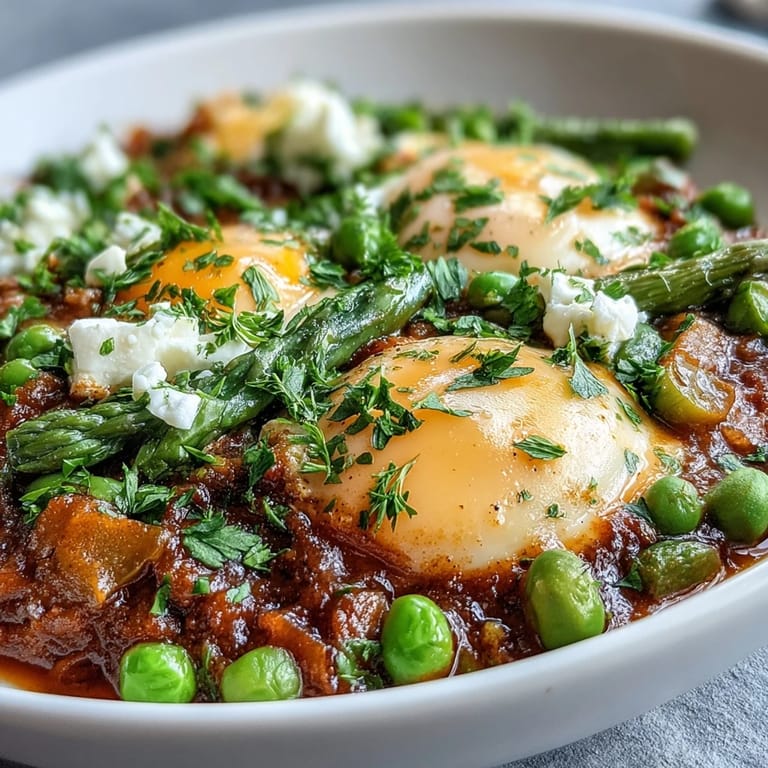
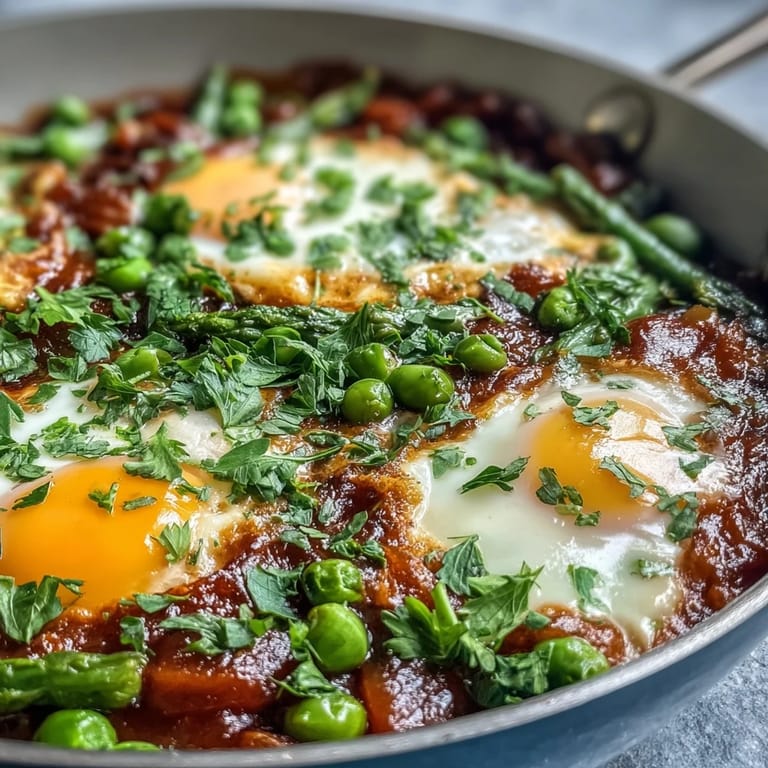
- Using the back of a spoon, make small wells in the sauce for your eggs—think of them as little nests. Crack each egg gently into a well, cover the pan, and cook on low heat for 5 to 7 minutes until the whites set but the yolks stay runny and inviting.
- Finish and serve:
- Remove from heat, scatter the fresh parsley or mint over the top, add crumbled feta if you're using it, and serve straight from the pan with lemon wedges and crusty bread on the side. This is the part where people lean in and take a breath before eating.
 Save
Save There's something about watching someone crack into that runny yolk and watch it pool into the spiced sauce that makes you understand why shakshuka has lasted so long across so many cultures. It's nourishing and a little bit luxurious at the same time, and it happens in one pan.
Why Spring Vegetables Matter Here
Spring vegetables aren't just seasonal preference—they're actually better for this dish because they're tender enough to cook through without falling apart in the sauce. Fresh peas, broad beans, and asparagus have a brightness that feels lighter than their winter cousins, which means the whole meal feels generous rather than heavy. This is when you want to buy what's actually in season at your market, because the flavor difference is real and worth noticing.
Timing Is Your Friend
The whole thing comes together in 45 minutes, which sounds impossible until you realize that most of that time is just letting things simmer while you do something else. You could prep the vegetables earlier in the day, keep them separate in small bowls, and be at the table eating dinner 20 minutes after you start cooking. The beauty of shakshuka is that it works on whatever schedule you have, as long as you don't rush the egg-cooking part.
Ways to Make It Your Own
This recipe is a sturdy frame, not a prison. I've made it with spinach and zucchini on nights when that's what I had in the fridge, and it was perfect every time. The spice level can shift based on who's eating—leave out the chili flakes if heat isn't welcome, or add a fresh chopped chili if you want more fire. For a vegan version, skip the eggs and feta, and stir in some drained canned chickpeas for protein and heartiness.
- Try adding fresh spinach or small zucchini chunks alongside the spring vegetables for extra greens and substance.
- If you make this for a crowd, you can double the sauce portion and cook it in a larger pan, then add more eggs before serving.
- Leftover sauce (without eggs) keeps well in the fridge for three days and is wonderful reheated with fresh eggs or chickpeas.
 Save
Save Shakshuka is one of those dishes that reminds you why people gather around food—it's nourishing and generous, and it asks everyone at the table to slow down and eat together. Once you make it, it becomes the thing you reach for when you want dinner to feel like something more than just feeding yourself.
Recipe FAQs
- → Can I make this ahead of time?
Yes, prepare the vegetable sauce up to a day in advance and reheat gently before adding the eggs. The flavors often develop and improve overnight.
- → How do I know when the eggs are done?
The whites should be fully set and opaque while the yolks remain runny. This usually takes 5-7 minutes covered. Cook longer if you prefer firm yolks.
- → Can I use frozen vegetables?
Absolutely. Frozen peas and broad beans work perfectly and don't require thawing first. Just add them directly to the simmering sauce.
- → What should I serve with this?
Warm crusty bread, pita, or flatbread are ideal for dipping. A simple green salad or roasted vegetables also make excellent sides.
- → How can I make it vegan?
Omit the eggs and feta. Add drained canned chickpeas or extra beans for protein. The vegetable sauce is delicious on its own.