 Save
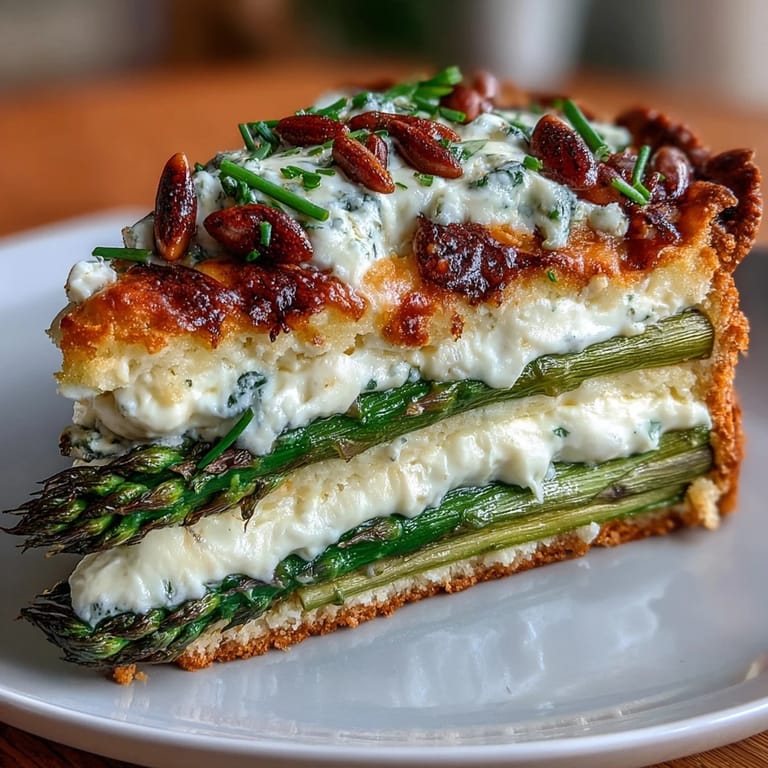
Save There's something about the first warm afternoon of spring that makes you want to cook with your windows open, and that's exactly when I discovered how perfectly asparagus and puff pastry belong together. A neighbor had just returned from the farmers market with a bundle of impossibly thin, bright green spears, and rather than roasting them plain, I found myself reaching for a sheet of thawed puff pastry in my freezer. The result was so effortlessly elegant that I've made it dozens of times since, each version slightly different depending on what cheese I have on hand or which herb is thriving in my kitchen garden.
I remember bringing this to a dinner party where someone had just announced they were learning to cook, and watching their face when they realized how straightforward it all was—how the tart came together in the time it took everyone to have a drink and chat. They made it the next week and texted me a photo of their golden, perfectly puffed pastry, and suddenly I realized this recipe had become one of those quiet kitchen wins that gets passed along.
Ingredients
- Thin asparagus, about 400 g: Thinner spears cook through more gently and won't overpower the delicate cheese filling; if you only have thick ones, slice them lengthwise so they cook faster and look more elegant on top.
- Crème fraîche or ricotta, 200 g: Crème fraîche gives a silkier, slightly tangy base, while ricotta is lighter and works beautifully if you want something less rich.
- Gruyère or Parmesan cheese, 100 g grated: Both melt into the filling and toast on top; Gruyère is nuttier and more forgiving, Parmesan sharper and more assertive.
- One egg, lightly beaten: This becomes your pastry wash, turning the edges golden brown and giving that restaurant-quality shine.
- All-butter puff pastry, one sheet (250 g): Thaw it in the refrigerator overnight if you have time; cold pastry puffs higher and more dramatically.
- Fresh chives or dill, 2 tbsp finely chopped: Chives are milder and work with almost any cheese pairing, while dill brings a more assertive, almost coastal flavor.
- Lemon zest, 1 tsp: This small amount brightens everything without making the tart taste citrusy; don't skip it, as it's what keeps the filling from feeling one-note.
- Salt and freshly ground black pepper: Taste as you go with the filling, since cheese is already salty.
- Toasted pine nuts and fresh microgreens (optional garnish): These add texture and visual interest, but honestly, the tart is beautiful on its own.
Tired of Takeout? 🥡
Get 10 meals you can make faster than delivery arrives. Seriously.
One email. No spam. Unsubscribe anytime.
Instructions
- Get your oven and pastry ready:
- Preheat to 200°C (400°F) and line your tray with parchment paper while you work with the pastry; this gives everything time to settle to the right temperature. If your puff pastry sheet isn't already the right size, roll it gently on a floured surface into a rough rectangle about 25 by 35 cm.
- Score and prep the pastry:
- Using a sharp knife, lightly score a border about 2 cm from the edge all around—you're not cutting through, just creating a visual guide and helping that border puff dramatically. Prick the inner rectangle with a fork in a scattered pattern so it doesn't puff up unevenly.
- Build your cheese filling:
- Combine your crème fraîche or ricotta with half the grated cheese, your chopped herbs, lemon zest, and a good pinch of salt and pepper; mix until smooth and taste it because this is where most of your flavor lives. Spread this mixture evenly within that scored inner rectangle, leaving that 2 cm border bare so the pastry edges have room to rise.
- Arrange the asparagus:
- Lay the asparagus spears over the cheese in whatever pattern makes you happy—I like alternating the tips, but straight rows are just as lovely and perhaps more practical. Don't worry about them looking perfect; they'll soften slightly as they bake and settle into themselves.
- Finish and bake:
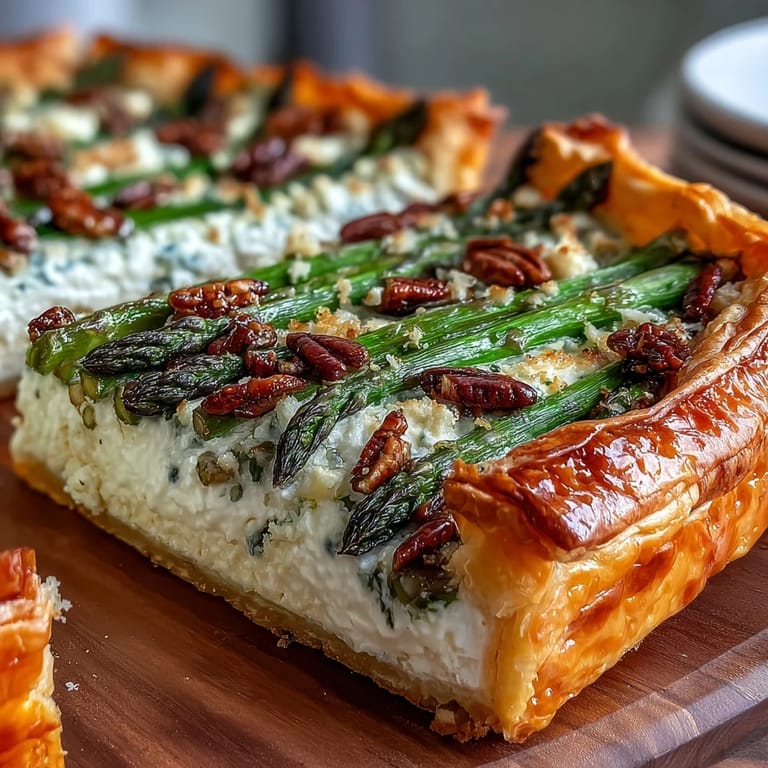
- Brush that bare pastry border generously with your beaten egg, then scatter the remaining cheese over the asparagus spears. Slide into the oven for 20 to 25 minutes, watching until the pastry is golden and puffed and the asparagus tips are just tender when you poke one with a fork.
- Rest and serve:
- Let it cool for a few minutes before slicing; this lets the pastry set slightly so it doesn't fall apart when you cut. Scatter with toasted pine nuts or microgreens if you want that final touch, and serve it warm or at room temperature alongside a crisp white wine.
 Save
Save I think what makes this tart so special is that moment when you pull it from the oven and the kitchen suddenly smells like butter and toasted pastry and spring all at once, and you realize you've created something that tastes far more impressive than the effort it required. It's become my go-to dish when I want to feel like I've done something special without spending the entire afternoon in the kitchen.
Timing and Make-Ahead Magic
You can assemble this tart up to 4 hours ahead, cover it loosely with plastic wrap, and refrigerate it until you're ready to bake; in fact, a cold tart often bakes even more beautifully because the pastry starts from a very cold state. If you're really organized, you can even prepare the cheese filling and trim the asparagus the night before, keeping each component separate so everything stays fresh.
Variations and Flavor Swaps
Once you understand the basic structure—scored pastry, creamy filling, vegetable on top—you can adapt this to almost anything in your kitchen or garden. Early summer might call for thin zucchini and ricotta with mint, autumn could feature roasted mushrooms and thyme, and winter opens up possibilities with caramelized onions and sage.
Wine Pairing and Serving
A crisp Sauvignon Blanc or Pinot Grigio is genuinely the perfect companion here; the wine's acidity cuts through the richness of the cheese and echoes the brightness of the lemon and herbs. I've also had luck with a light, chilled Vermentino or even a dry Albariño if you're feeling adventurous, and honestly, just serve it at a temperature that makes you happy.
- If you're serving this as a starter, one tart cut into four pieces is generous and leaves room for what comes next.
- For a light lunch, pair it with a simple green salad dressed with lemon vinaigrette so you're not eating too much richness at once.
- Leftovers keep beautifully for two days in an airtight container and taste wonderful cold or gently warmed in a low oven.
 Save
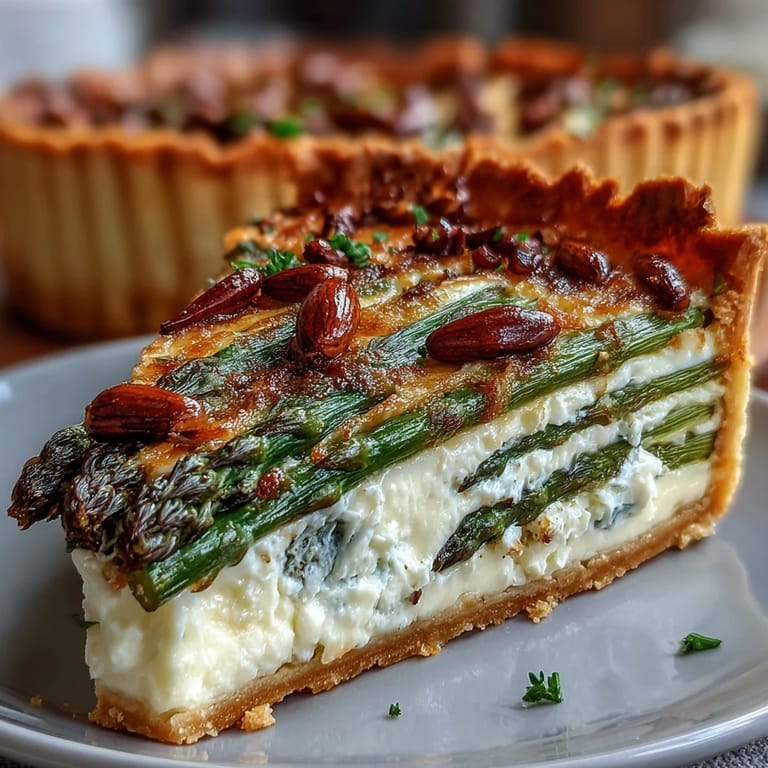
Save This tart has quietly become one of those recipes I reach for whenever I want to cook something that feels special without requiring a cookbook and three hours of focus. Every time you make it, you'll find your own small ways to adjust it, and that's exactly how it should be.
Recipe FAQs
- → How do I prevent the puff pastry from becoming soggy?
Scoring the pastry edges and pricking the center helps steam escape, maintaining crispness. Also, spreading cheese mixture evenly prevents moisture buildup.
- → Can I substitute the cheeses used in this tart?
Yes, replacing ricotta with goat cheese adds tanginess, and Gruyère or Parmesan can be swapped based on preference.
- → What is the best way to prepare asparagus for this tart?
Trim the woody ends and arrange thin asparagus spears neatly atop the cheese mixture so they cook evenly and present well.
- → Are there suitable garnishes to enhance the tart?
Toasted pine nuts and fresh microgreens or herbs add texture and a bright finish, complementing the creamy and flaky components.
- → Could this tart be made ahead of time?
Assemble the tart but bake just before serving to ensure the puff pastry remains crisp and the asparagus tender.