 Save
Save Last spring, my neighbor handed me a basket of dandelion petals she'd foraged from her yard, and I stood in my kitchen wondering what on earth to do with them. A quick scroll through old British recipes led me to scones—those tender, crumbly treasures that somehow taste like butter and clouds. That first batch came out of the oven golden and humbling, and I realized dandelions weren't just weeds; they were spring's secret ingredient, waiting to be noticed. The moment I bit into one warm from the oven, still steaming, with a dollop of clotted cream melting into the crumb, everything clicked.
My sister showed up unannounced one Saturday with her kids, and instead of panic, I had time to bake these before noon. Watching the children bite into warm scones, their eyes widen at the delicate flower flavor, their cream-covered faces pure joy—that's when I understood these weren't just scones. They were a way to turn foraged weeds into something that brought people together, proof that the best recipes are the ones you can make with confidence for the people you love.
Ingredients
- All-purpose flour (2 cups): The foundation of tender scones; measuring by weight keeps them consistent every time.
- Granulated sugar (1/4 cup): Just enough sweetness to let the honey and dandelions shine, not overpower.
- Baking powder (1 tbsp): This is your lift; make sure yours is fresh or the scones stay dense.
- Fine sea salt (1/2 tsp): A pinch of salt actually deepens the floral notes and prevents the sweetness from feeling cloying.
- Cold unsalted butter (1/2 cup cubed): The secret to flaky, tender crumb; cut it small and keep it icy cold so the pieces stay distinct in the dough.
- Cold whole milk (2/3 cup): Adds richness and helps bind everything; cold milk prevents the butter from melting too soon.
- Fresh dandelion petals (2 tbsp in dough, 2 tbsp for garnish): Use only the yellow petals from pesticide-free flowers, fully opened; any green will taste bitter and ruin the delicate balance.
- Honey (2 tbsp in dough, 1 tbsp for drizzle): Adds subtle floral notes and light sweetness that complement the dandelions perfectly.
- Large egg (1): Binds the dough and gives the scones their tender crumb and golden top.
- Clotted cream (to serve): Rich, luxurious, and exactly what these scones deserve; if you can't find it, whipped cream or mascarpone works but won't taste quite the same.
Tired of Takeout? 🥡
Get 10 meals you can make faster than delivery arrives. Seriously.
One email. No spam. Unsubscribe anytime.
Instructions
- Heat and prep your space:
- Preheat the oven to 400°F and line a baking sheet with parchment paper while the heat builds; a hot oven is crucial for those puffy, golden tops.
- Mix the dry foundation:
- Whisk flour, sugar, baking powder, and salt in a large bowl until they're evenly combined and look like fine sand.
- Work in the cold butter:
- Cut the cold butter into small pieces, then use a pastry cutter or your fingertips to rub it into the flour mixture until it resembles coarse breadcrumbs with a few pea-sized bits of butter still visible. This uneven texture is what creates those delicate, flaky layers.
- Combine the wet ingredients:
- Whisk together cold milk, honey, egg, and the dandelion petals in a separate bowl until the petals are distributed and the mixture looks pale yellow.
- Bring it together gently:
- Pour the wet mixture into the dry ingredients and stir with a fork until just combined; the dough should be slightly shaggy and loose. Overmixing develops gluten, which makes scones tough instead of tender.
- Shape and cut:
- Turn the dough onto a lightly floured surface and gently pat it into a 1-inch-thick round, handling it as little as possible. Cut it into 8 wedges like a pie and transfer to the prepared baking sheet, spacing them slightly apart.
- Bake until golden:
- Bake for 16 to 18 minutes, watching for a light golden-brown color and a slight puff; the tops should look dry, not wet or damp.
- Finish with flowers and honey:
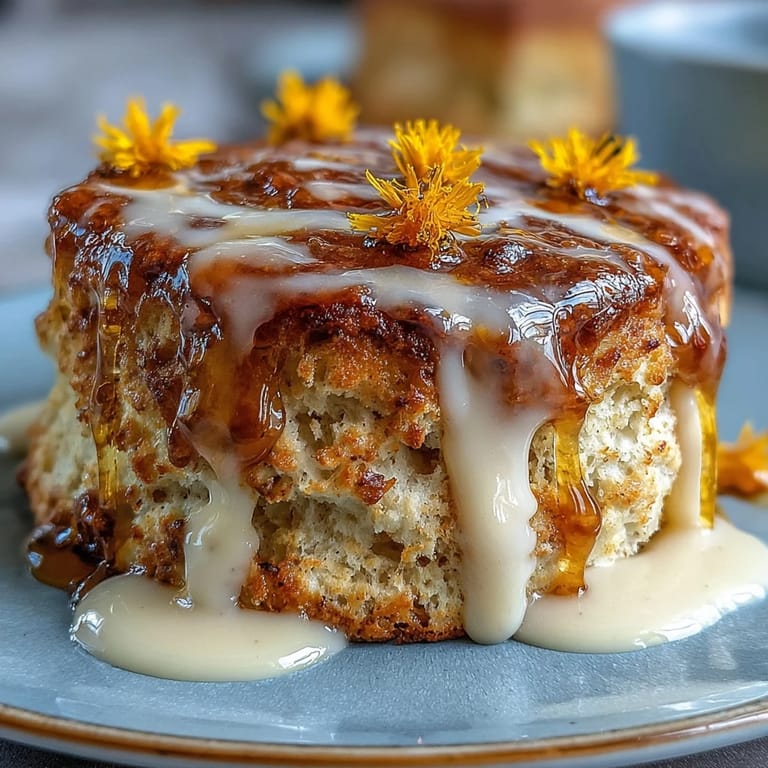
- Remove from the oven and while still warm, drizzle honey over each scone and sprinkle the remaining dandelion petals on top for that final touch of spring.
- Serve immediately:
- Scones are best warm, with generous dollops of clotted cream alongside.
 Save
Save There's a quiet magic in the moment when you pull warm scones from the oven and the kitchen fills with that honey-floral smell. My mom called me that spring morning while they were baking, and I held the phone toward the oven so she could hear the sizzle, could almost smell them through the line. That's the scone moment—it's not just breakfast, it's an invitation to slow down and notice small, beautiful things.
Why Dandelions Belong in Your Kitchen
I used to see dandelions as lawn invaders until I started foraging, and now they feel like spring's most honest plant. They're nutritious, free if you have a yard, and their delicate floral sweetness is nothing like the bitter greens most people assume they taste like. When you use only the petals and avoid any green, dandelions taste like honey smells—warm, subtle, and somehow nostalgic.
The Clotted Cream Question
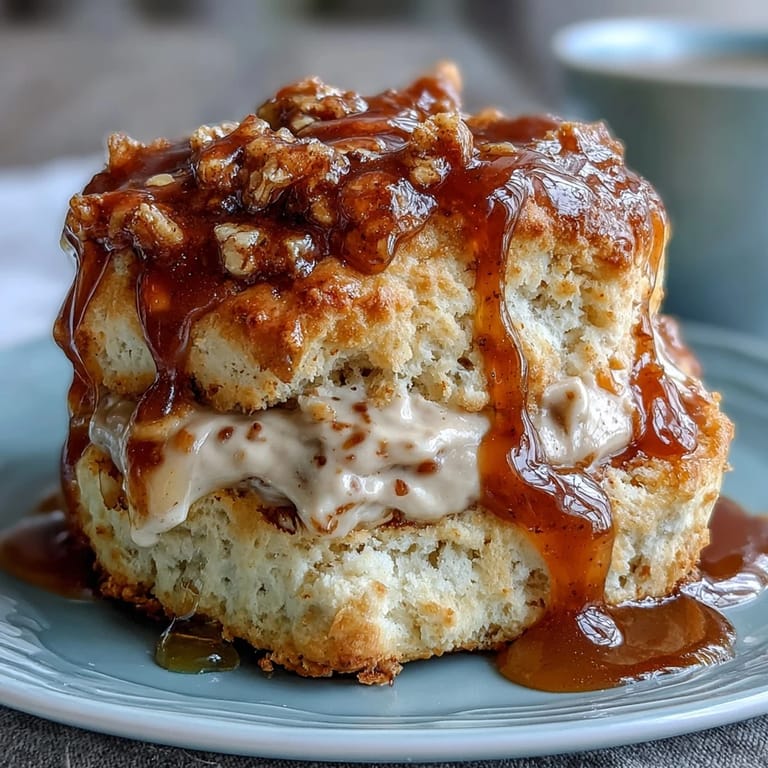
Clotted cream is thick, spoonable, and absolutely changes the experience of eating a scone compared to regular whipped cream. If you've never tried it, hunt for it in specialty shops or order it online; it's worth the effort because it doesn't melt as quickly and has a deeper, almost caramelized flavor that matches honey beautifully. That said, if you're in a pinch, mascarpone whipped with a touch of honey does a respectable job.
When to Make These and How to Make Them Again
These scones shine in late spring and early summer when dandelions are at their peak and your garden is exploding with life. They're best eaten the same day, still warm, but I've stored leftovers in an airtight container for a day and warmed them gently in the oven. The timing is short enough—under 40 minutes from fridge to table—that they're perfect for unexpected guests or a quiet morning when you want to feel like you've accomplished something beautiful.
- If dandelions aren't available, try using edible flowers like primrose petals or even a light orange blossom extract to keep that floral note alive.
- Make the dough the night before and cut it into wedges; cover and refrigerate, then bake straight from cold for even more tender results.
- Serve with a cup of floral tea like chamomile or a light sparkling wine to echo the delicate flavors in the scones themselves.
 Save
Save These scones turned a wild plant most people ignore into something worth celebrating, and that shift in perspective has changed how I cook. Now I'm always looking for the overlooked ingredients hiding in plain sight, the ones that can surprise people and make ordinary mornings feel like occasions.
Recipe FAQs
- → What makes these scones tender and flaky?
Using cold, cubed butter cut into the dry ingredients creates flaky layers. Minimal mixing preserves tenderness by avoiding gluten development.
- → Can I substitute clotted cream with another topping?
Yes, whipped cream or mascarpone are excellent alternatives that pair well with the scones' sweetness and floral notes.
- → Why use only yellow dandelion petals and not the green parts?
Yellow petals provide a delicate floral flavor, while green parts can taste bitter and affect overall taste.
- → How should these scones be stored if not eaten immediately?
Best enjoyed fresh, but can be wrapped tightly and kept at room temperature for up to a day. Reheat gently before serving.
- → What are ideal beverage pairings for this dish?
Floral white teas or light sparkling wines complement the honey and dandelion nuances beautifully, enhancing the brunch experience.