 Save
Save There's something about the smell of roasting butternut squash that stops me mid-afternoon—this deep, caramelized sweetness that fills the kitchen and makes you pause whatever you're doing. I discovered this soup on a gray October day when I had a squash sitting on my counter and absolutely no inspiration. What emerged was this silky, warming bowl that tasted like someone had distilled autumn into a spoon, and I've made it countless times since whenever I need both comfort and clarity.
I made this for my neighbor last winter when she was recovering from surgery, and watching her face as she tasted it—that genuine softening—reminded me why simple, nourishing food matters so much. She asked for the recipe immediately, and now it's become her go-to when someone in her life needs feeding. That's when I knew this wasn't just a recipe; it was something worth knowing by heart.
Ingredients
- Butternut squash: Choose one that feels heavy for its size—that means it's water-dense and will yield silky results; the golden flesh is what makes this soup taste like autumn in a bowl.
- Onion and carrots: These are your flavor foundation, so don't rush them; they need those 5–7 minutes to really soften and release their sweetness.
- Garlic: Just two cloves is enough because it's not meant to shout, only whisper underneath the earthiness of the squash.
- Vegetable stock: Use a quality one if you have it—the soup will taste only as good as your broth.
- Coconut milk: This is the secret to the velvety finish; it rounds out all the warmth without making the soup heavy, but heavy cream works beautifully too if that's what you reach for.
- Olive oil: Two tablespoons total seems modest, but that's exactly the right amount to let the vegetables speak for themselves.
- Cumin and nutmeg: These two spices work like a whisper; they're what makes people pause and ask what they're tasting without being able to name it.
Tired of Takeout? 🥡
Get 10 meals you can make faster than delivery arrives. Seriously.
One email. No spam. Unsubscribe anytime.
Instructions
- Set your oven and begin roasting:
- Preheat to 200°C and while it's warming, toss your diced squash with a tablespoon of olive oil, salt, and pepper until every piece is lightly coated. Spread it on a baking tray in a single layer and slide it in; you're aiming for golden edges and tender flesh in about 25 minutes.
- Build your aromatics:
- While the squash roasts, heat the remaining oil in a large pot and add your onion and carrots, letting them soften together for 5–7 minutes until they're tender and fragrant. This is where the soup starts developing depth.
- Add the spices:
- Once the vegetables are soft, add your minced garlic, cumin, and nutmeg, stirring constantly for just one minute until the whole pot smells like warmth. Don't skip this step or rush it—this brief moment blooms the spices and wakes up the whole pot.
- Combine everything:
- When the squash is golden and tender, add it to the pot along with your vegetable stock, bring it all to a boil, then turn the heat down to a gentle simmer for 10 minutes. The flavors need time to meet and mingle.
- Blend into silk:
- Once the mixture has simmered, use an immersion blender to purée everything until it reaches that silky, pourable texture—or carefully work in batches with a regular blender if that's what you have. Either way, you're aiming for completely smooth with no grainy bits.
- Finish with creaminess:
- Stir in your coconut milk or cream, heat gently without letting it boil, and taste as you go, adjusting salt and pepper until it feels just right. This final touch is what transforms it from good to the kind of soup people ask about.
- Serve with intention:
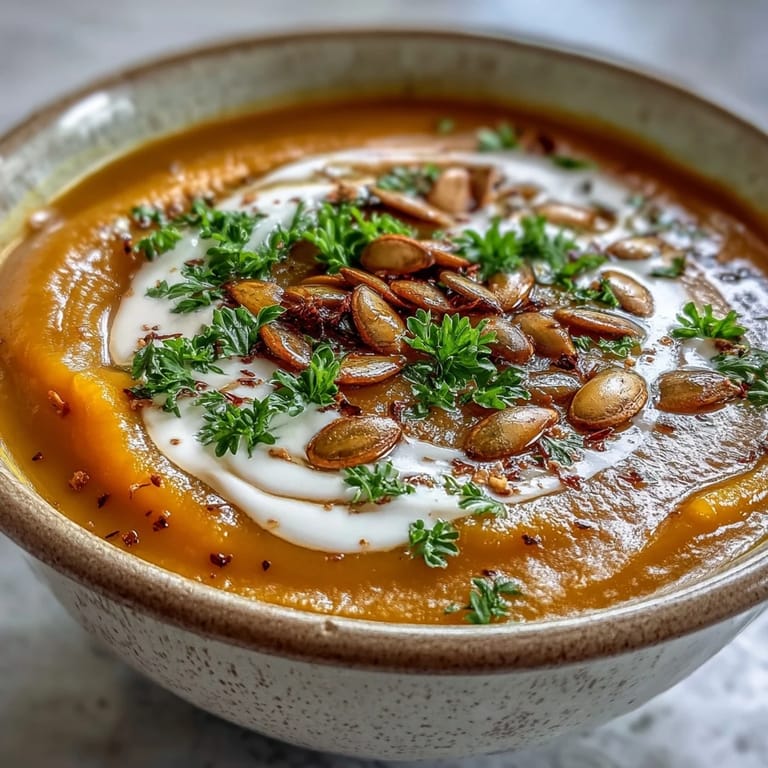
- Ladle into bowls and add whatever garnishes call to you—fresh herbs, toasted pumpkin seeds, and that final swirl of cream make it feel special even on an ordinary Tuesday.
 Save
Save One evening, a friend brought this soup to my house when I was overwhelmed with work deadlines and general chaos, and sitting with a warm bowl while snow fell outside felt like someone had given me permission to slow down. We didn't say much, just ate in comfortable silence, and I understood then why this soup had become more than a recipe—it had become a small act of kindness I could offer someone else.
The Magic of Roasting
There's genuine chemistry happening when butternut squash roasts—the natural sugars caramelize at the edges, creating depth and complexity that you absolutely cannot achieve by boiling the raw squash. I learned this the hard way once by trying to shortcut the process, and the difference was stark; the soup was one-dimensional and missed that underlying richness. Now I treat roasting not as optional but as essential, the way you wouldn't skip browning meat for a stew.
Texture and Consistency
The immersion blender changed everything for me because it meant I could blend the soup directly in the pot without cooling it first, which also meant the soup stayed hot and I didn't have to carefully work in batches like I used to do. If you use a traditional blender, work in smaller batches and always cover the lid loosely with a kitchen towel—hot soup has a tendency to bubble up and escape. The goal is a completely smooth, pourable texture with no graininess, which might take longer than you think but is absolutely worth your patience.
Variations and Swaps
Once you understand the foundation of this soup, it becomes a template for so many other versions—I've made it with sage instead of just the spices, stirred in crispy bacon for someone's dinner party, and even added a touch of curry powder for a friend who loves bold flavors. The beauty is that butternut squash is forgiving and wants to work with whatever direction you take it. These small experiments have taught me that recipes aren't meant to be rigid rules but rather starting points for your own discoveries.
- Add a pinch of chili flakes during the spice step if you want warmth and a gentle kick that builds on your tongue.
- Swap half the vegetable stock for apple cider for an autumn version that's slightly sweet and complex.
- Top with crispy sage leaves or a drizzle of brown butter if you want to turn an ordinary soup into something that feels like restaurant-quality comfort.
 Save
Save This soup has become my answer to almost everything—when I want something nourishing, when I need to feed someone I care about, or when autumn actually feels like it's arrived in my kitchen. Make it and see what it becomes for you.
Recipe FAQs
- → Why roast the butternut squash before making soup?
Roasting the squash concentrates its natural sugars and creates caramelized edges that add depth and sweetness. This extra step transforms the soup from simple to extraordinary, providing a richer, more complex flavor profile that boiling alone cannot achieve.
- → Can I make this soup ahead of time?
Absolutely. This soup actually improves after resting in the refrigerator for 1-2 days as the flavors meld together. Store in an airtight container and reheat gently over medium-low heat, stirring occasionally. You may need to add a splash of stock or milk when reheating if it has thickened.
- → What's the best way to achieve the smoothest texture?
An immersion blender works perfectly directly in the pot, but for the silkiest result, use a high-speed blender in batches. Blend for at least 1-2 minutes, then strain through a fine-mesh sieve for restaurant-quality smoothness. Be careful when blending hot liquids—never fill the blender more than halfway.
- → Can I substitute the coconut milk?
Yes, heavy cream creates an equally luxurious and slightly richer version. For a lighter option, use whole milk or half-and-half. Those avoiding dairy can opt for cashew cream or simply omit the creamy element entirely—though the soup will be thinner, it remains delicious.
- → What herbs work best as garnish?
Fresh sage leaves, lightly fried in butter until crispy, beautifully complement the squash. Fresh thyme, chopped parsley, or cilantro add brightness and color. A dusting of smoked paprika or a drizzle of pumpkin seed oil also enhances the presentation while adding complementary flavors.
- → How do I adjust the seasoning?
Season gradually throughout the cooking process. Salt brings out sweetness, while freshly cracked black pepper adds subtle heat. Taste after blending—this is when you'll most accurately perceive the final balance. Add more cumin for earthiness or nutmeg for warmth, but use nutmeg sparingly as it can easily overpower.