 Save
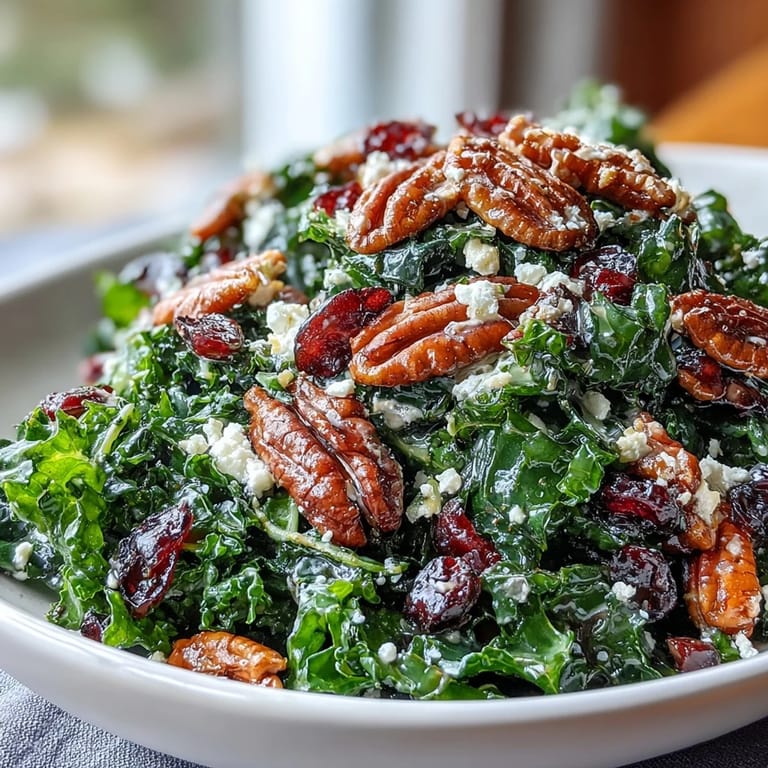
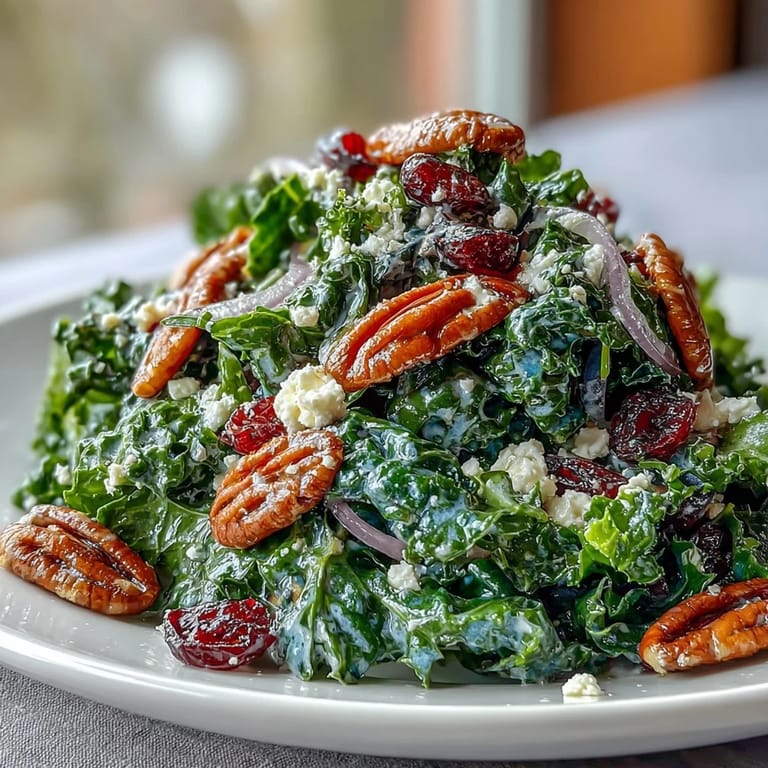
Save There's something about the smell of warm maple hitting mustard that made me stop chopping one October afternoon and just breathe it in. My neighbor had brought over a massive bunch of kale from her garden, and I was standing at my stove thinking about how to make it feel less like obligation and more like comfort. That's when it clicked—what if I warmed everything up instead of keeping it cold? The result was this salad that tastes like fall decided to become something you could actually eat as a main course.
I made this for my sister when she came home from a rough week of work, and watching her take that first bite—the way her shoulders actually relaxed—told me everything I needed to know about this recipe. She sat at my kitchen counter with the bowl in her lap, eating it slowly, and we didn't say much, which somehow meant everything. Food does that sometimes, becomes the conversation when words aren't enough.
Ingredients
- 1 large bunch curly kale (about 8 cups, stems removed, leaves torn): The massaging step is what transforms this from raw roughness into tender greens that actually want to absorb that warm dressing without falling apart.
- 1 tablespoon olive oil (for massaging): This loosens the kale's fibers and helps the salt penetrate, which is why you'll see the leaves go from dull to almost shiny.
- 1/4 teaspoon sea salt: Don't skip this part of the massaging; it's doing real work on the kale's cell structure.
- 1/3 cup dried cranberries: Their tartness punches through the sweetness of the maple, and they plump up slightly from the warmth of the dressing.
- 1/3 cup toasted pecans or walnuts, roughly chopped: Buy them pre-toasted if you can find them, or toast them yourself for five minutes in a dry skillet so they release their oils.
- 1/4 small red onion, thinly sliced: The warmth mellows its bite just enough, turning it from harsh to pleasantly sharp.
- 1/4 cup crumbled feta cheese (optional): It adds a briny note that stops everything from being too sweet, but you can absolutely skip it if you're going vegan.
- 3 tablespoons pure maple syrup: Use the real stuff—the pancake syrup versions have a chemical aftertaste that ruins the whole thing.
- 2 tablespoons Dijon mustard: The grainy kind works better than smooth because it catches the oil and creates a better emulsion.
- 2 tablespoons apple cider vinegar: This is what brings the brightness; don't substitute with balsamic or white vinegar without knowing you're changing the whole flavor.
- 1/4 teaspoon black pepper: Freshly cracked is worth the three seconds it takes.
- 1/4 teaspoon salt: Season to taste at the end because the dressing will concentrate as it sits.
- 3 tablespoons olive oil (for dressing): This needs to go in slowly so the warm base can actually hold it, like you're making a tiny warm vinaigrette from scratch.
Tired of Takeout? 🥡
Get 10 meals you can make faster than delivery arrives. Seriously.
One email. No spam. Unsubscribe anytime.
Instructions
- Massage Your Way to Tender Kale:
- Put the kale in your largest bowl, drizzle with that tablespoon of olive oil, sprinkle the sea salt over it, and then use your hands like you mean it—really work the oil and salt into those leaves for a good two to three minutes until they go from tough and dull to soft and glossy and almost emerald green. You'll feel them relax under your fingers, which sounds weird but is genuinely satisfying.
- Build Your Warm Dressing:
- In a small saucepan over low heat, whisk together the maple syrup, Dijon mustard, apple cider vinegar, black pepper, and salt until smooth and just barely warm—you're not cooking it, just bringing it to temperature. Slowly drizzle in the three tablespoons of olive oil while whisking constantly so it emulsifies into something thick and creamy rather than separating into oil puddles.
- Marry the Kale and Dressing:
- Pour that warm dressing right over your massaged kale and toss everything together until every leaf is coated and glistening. The warmth will soften the kale a bit more, and the flavors start getting cozy with each other.
- Add the Texture and Brightness:
- Toss in the dried cranberries, toasted nuts, and sliced red onion, mixing gently so the nuts don't shatter into dust and the cranberries stay whole. If you're using feta, don't mix it in yet—save that for plating.
- Plate and Serve Warm:
- Divide the salad among bowls or onto a platter, top with feta if you're using it, and eat it while it's still warm enough to feel like a hug. If you wait too long it's still good, but the magic happens in those first few minutes when the warmth and the freshness are still holding hands.
 Save
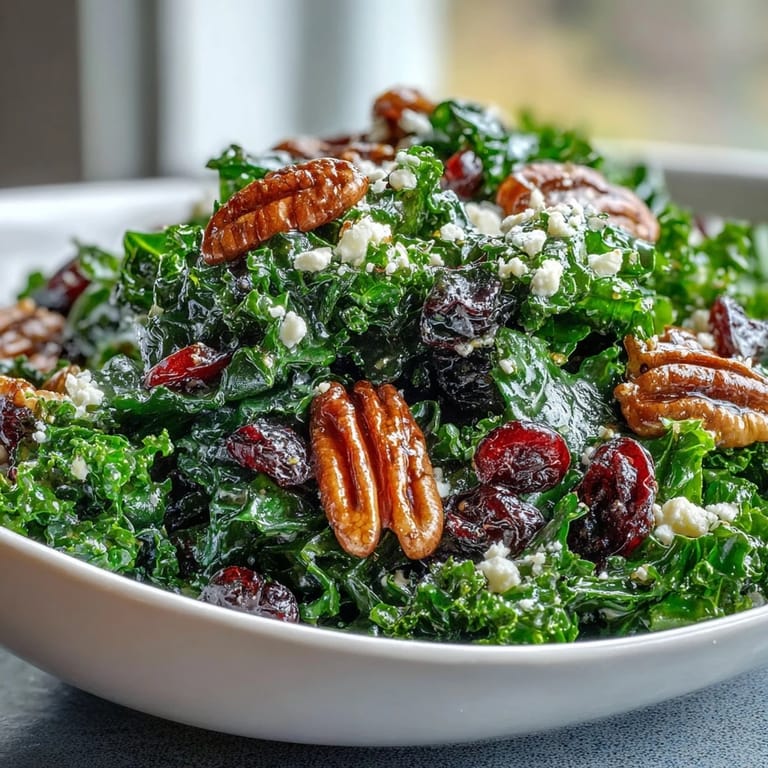
Save There was a moment during a dinner party when someone asked why this salad didn't feel heavy the way warm salads sometimes do, and I realized it's because the kale is still eating like it's raw—it just happens to be comfortable. That's the whole thing, really: making something feel nourishing without making it feel work.
Why the Warm Dressing Changes Everything
Cold dressing on raw kale can taste a bit flat and one-note, but the moment that warm maple-mustard glaze hits the massaged leaves, something almost chemical happens—the flavors come alive and seem to amplify each other. The sweetness isn't cloying anymore; it's balanced by the sharp mustard and bright vinegar, and the warmth carries those flavors deeper into the leaves so every bite tastes intentional.
The Massaging Step Is Not Optional
I learned this the hard way by skipping it once because I was tired, and the result was a salad where the kale still felt slightly resistant, like it was tolerating the dressing instead of embracing it. Massaging breaks down the kale's cell walls, making it tender and more receptive to flavor, which is a fancy way of saying your teeth don't have to work so hard and the whole thing tastes better. It takes three minutes and changes the entire eating experience, so don't rush it.
Serving Suggestions and Small Changes That Matter
This salad stands perfectly on its own, but it also plays well with others—I've served it alongside roasted salmon and grilled chicken, and it's acted as a proper side dish instead of an afterthought. You can add roasted butternut squash cubes or thin apple slices if you want more sweetness and body, or swap the walnuts for toasted pumpkin seeds if someone at your table has a nut allergy.
- If you're vegan, skip the feta entirely or use a cashew-based crumble that won't melt when it hits the warm salad.
- Baby spinach works in a pinch, but don't massage it—it'll turn into mush and lose its structural integrity.
- Make the dressing while the kale is massaging so everything comes together at the right temperature.
 Save
Save This salad has become one of those recipes I make when I want to feel like I'm taking care of someone, including myself. There's something grounding about warm food that also feels bright and alive, and that's exactly what this is.
Recipe FAQs
- → Why massage the kale?
Massaging kale with olive oil and salt breaks down the tough cell structure, transforming bitter, fibrous leaves into tender, silky greens. This simple 2-3 minute technique makes raw kale enjoyable and helps the dressing coat evenly.
- → Can I make this ahead?
The dressed kale holds up beautifully for hours, making this excellent for meal prep. Store the components separately and combine when ready to serve, or dress the entire salad—it won't wilt like delicate greens.
- → What if I don't like kale?
Baby spinach works as a substitute, though skip the massaging step since spinach leaves are naturally tender. The warm dressing will slightly wilt the spinach, creating a similarly comforting texture.
- → Is warm dressing necessary?
Gently warming the maple-mustard mixture helps it emulsify better and slightly softens the kale for a more comforting dish. However, room temperature dressing works fine if you're short on time.
- → Can I add protein?
This pairs wonderfully with grilled chicken, roasted salmon, or crispy chickpeas. You could also add hard-boiled eggs, quinoa, or hemp seeds to make it more filling as a standalone meal.
- → How do I toast nuts properly?
Spread pecans or walnuts in a single layer on a baking sheet and toast at 350°F for 5-8 minutes, shaking halfway through. Watch closely—they go from perfectly golden to burned quickly. Alternatively, toast in a dry skillet over medium heat for 3-5 minutes.