 Save
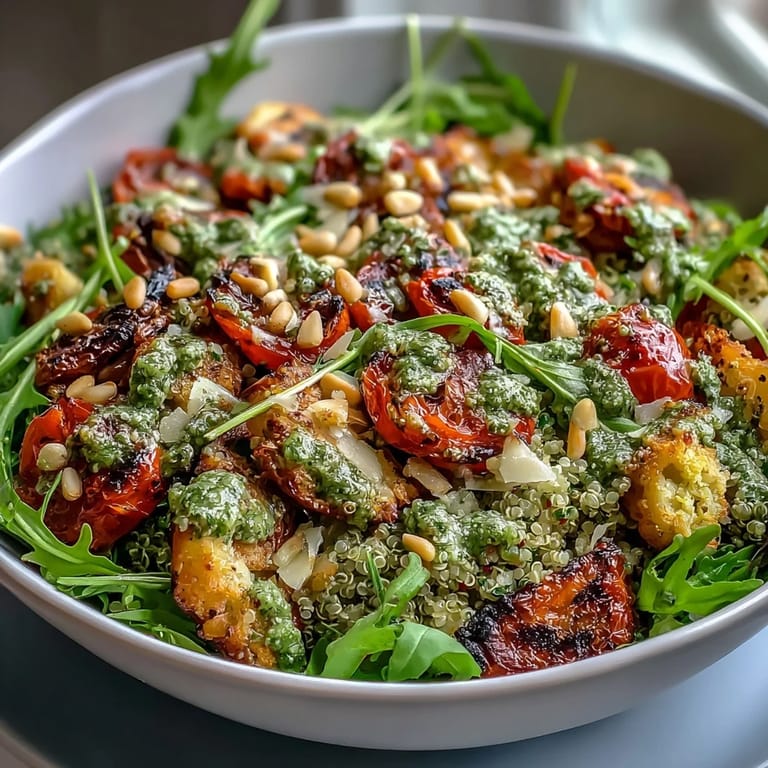
Save My kitchen smelled like roasted peppers when I first decided to throw together whatever vegetables were lingering in my crisper drawer with some quinoa and an experimental pesto made from a bunch of peppery arugula I'd grabbed on impulse. What started as a weeknight solution turned into something so bright and alive on the plate that I found myself making it again the very next day, this time intentionally, and realizing I'd stumbled onto something worth sharing.
I made this for a friend who'd been eating the same sad desk lunch for three weeks straight, and watching her face when she tasted that first spoonful of nutty quinoa coated in bright green pesto reminded me why I love cooking food that actually makes people pause and pay attention to what they're eating.
Ingredients
- Quinoa (1 cup uncooked): Rinse this under cold water before cooking, even though it seems fussy, because it removes that bitter coating that nobody talks about but everyone notices.
- Water and salt for quinoa (2 cups water, ½ teaspoon salt): The salt goes right into the cooking water so the grains taste seasoned all the way through instead of just on the surface.
- Cherry tomatoes (1 cup, halved): Buy the ones that still smell faintly of the vine if you can, because roasting intensifies their sweetness in a way that transforms them completely.
- Zucchini (1 medium, sliced): Cut these into rounds about a quarter-inch thick so they get a little crispy at the edges but stay tender inside.
- Red bell pepper (1 medium, chopped): The color matters here as much as the taste, so don't skip it even if you think you're not a pepper person.
- Olive oil for roasting (1 tablespoon): A little goes a long way when you're roasting, and you can always add more if things seem dry halfway through.
- Fresh arugula for pesto (2 cups, packed): That peppery bite is what makes this whole thing work, so seek out fresh leaves and taste one before committing.
- Walnuts or pine nuts (¼ cup): Walnuts are earthy and wallet-friendly, while pine nuts are buttery and luxurious, so choose based on your mood and budget.
- Garlic (1 clove): One clove is plenty when it's going raw into a pesto, trust me on this one.
- Parmesan cheese (½ cup grated for pesto, ¼ cup shaved for serving): The quality matters here because it's a starring ingredient, so buy a wedge and grate it yourself if possible.
- Olive oil (½ cup for pesto): This should taste good enough to drink straight, because it's what carries all the pesto flavor.
- Lemon juice (1 tablespoon): Fresh lemon keeps the pesto from turning dark and adds brightness that nothing else can replicate.
- Fresh arugula for serving (2 cups): This raw handful at the bottom of each bowl adds a crisp contrast and keeps everything from feeling too heavy.
- Toasted pine nuts for garnish (¼ cup optional): If you have the time and the inclination, toasting these yourself takes five minutes and makes all the difference.
Tired of Takeout? 🥡
Get 10 meals you can make faster than delivery arrives. Seriously.
One email. No spam. Unsubscribe anytime.
Instructions
- Start your quinoa:
- Rinse the quinoa under cold water in a fine mesh strainer until the water runs clear, then combine it with 2 cups of water and salt in a saucepan. Bring everything to a boil, then cover and reduce the heat so it barely simmers for about 15 minutes until the water disappears and you see those little spiral tails pop out of each grain.
- Get the oven hot:
- While the quinoa is going, preheat your oven to 400 degrees Fahrenheit so it's ready to transform those vegetables into something caramelized and delicious.
- Prepare your vegetables:
- Toss your halved cherry tomatoes, sliced zucchini, and chopped bell pepper with a tablespoon of olive oil and black pepper, then spread them out on a baking sheet in a single layer so they roast instead of steam. They'll need about 18 to 20 minutes until they're tender and the edges start to brown.
- Build your pesto:
- While everything else cooks, add your packed arugula, nuts, garlic clove, and grated Parmesan into a food processor and pulse until everything's broken down. With the motor running, slowly drizzle in your olive oil and lemon juice until you've got something smooth and creamy, then taste it and adjust the salt.
- Combine the warm components:
- Once your roasted vegetables are out of the oven and your quinoa is fluffy, dump them together in a large bowl with about half of your pesto and toss everything gently so the pesto coats everything without crushing the vegetables.
- Assemble your bowls:
- Put a handful of fresh raw arugula in the bottom of each serving bowl, then top it with your warm quinoa and vegetable mixture and drizzle with the remaining pesto.
- Finish and serve:
- Top each bowl with shaved Parmesan, any toasted pine nuts you're using, and a crack of fresh black pepper, then eat it while the quinoa is still warm and the raw arugula is still crisp.
 Save
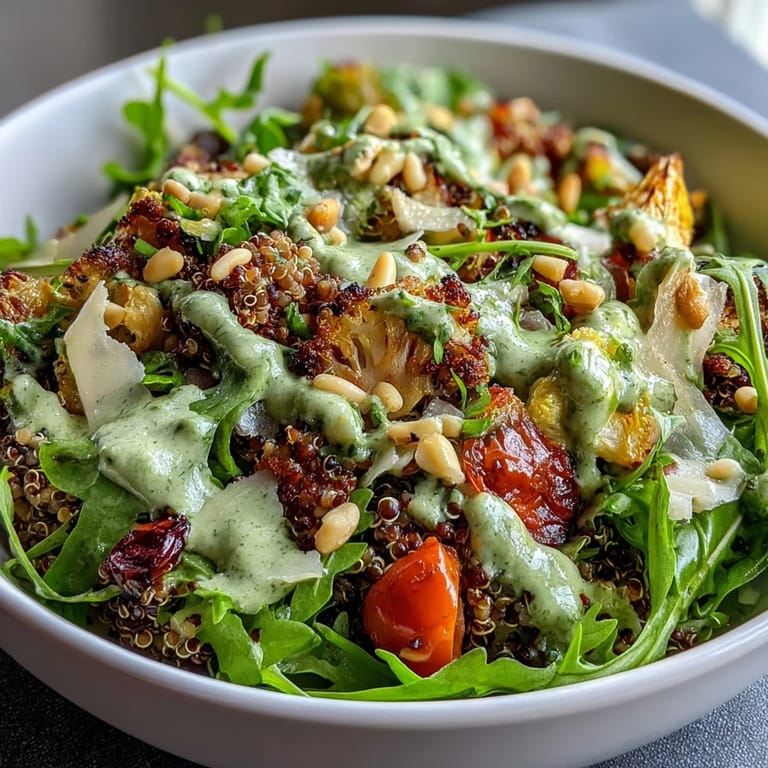
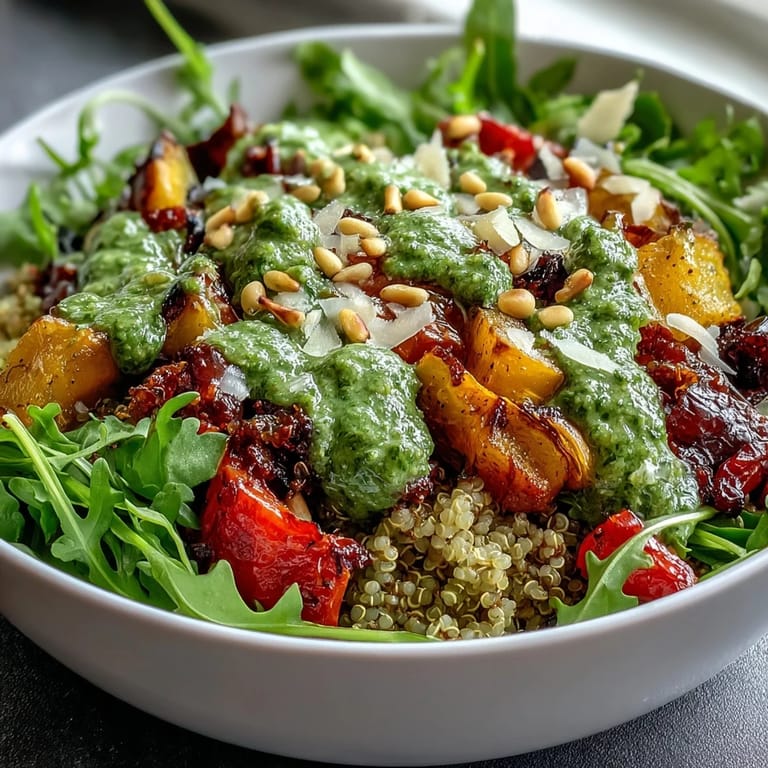
Save There's something almost meditative about building these bowls, layering the cool arugula base with warm roasted vegetables and that herbaceous pesto all coming together in one place. It's food that makes you feel good both while you're eating it and after, which is rare enough that it deserves to be in your regular rotation.
Why This Bowl Actually Works
The genius of this particular combination is that you've got temperature contrast happening on every level: the warm quinoa and roasted vegetables against the crisp cold arugula, the earthiness of the grains against the peppery brightness of the pesto. There's also this textural thing going on with soft roasted vegetables, chewy quinoa, crunchy nuts, and tender leaves all demanding your attention at once, which is exactly what makes it more interesting than just dumping everything into one warm bowl.
Playing with Variations
Once you've made this a few times, you'll start seeing it as a template rather than a strict formula, which is when cooking gets genuinely fun. I've made it with farro instead of quinoa when I felt like something chewier, swapped the roasted vegetables for whatever needed to get used up from the farmer's market, and even thrown in some roasted chickpeas when I needed something more substantial for lunch the next day. The arugula pesto is the non-negotiable element that ties everything together, but everything else bends to your preferences and pantry situation.
Making It Your Own
The arugula pesto is your secret weapon here, the element that transforms simple roasted vegetables and grains into something that tastes intentional and composed. It's bold enough to carry the whole dish, but it also plays nicely with additions like grilled chicken or crispy tofu if you want to make this more of a complete dinner rather than a vegetarian side. The beauty of this bowl is that it works for meal prep because you can store the components separately and assemble them fresh each day, or you can eat it immediately while everything's still warm and crisp and alive.
- If you're making this ahead, keep the pesto and raw arugula separate and combine everything just before eating to maintain the best textures and flavors.
- A squeeze of fresh lemon over the top right before you dig in brightens everything and makes it taste like summer no matter what season it actually is.
- This pairs beautifully with something crisp and cold to drink, whether that's white wine or just really cold sparkling water with lemon.
 Save
Save This bowl has become my answer to the question of what to make when I want something that feels nourishing without being heavy, something that tastes bright and intentional without requiring any real technical skill or special equipment. Make it once and it becomes something you'll reach for again and again.
Recipe FAQs
- → Can I make the arugula pesto ahead of time?
Yes, prepare the pesto up to 5 days in advance and store it in an airtight container in the refrigerator. The flavors actually develop and intensify over time. You can also freeze pesto in ice cube trays for longer storage.
- → What vegetables work best in this bowl?
Cherry tomatoes, zucchini, and red bell pepper roast beautifully together. Feel free to add eggplant, red onion, sweet potato, or asparagus depending on the season. Just adjust roasting times accordingly so everything finishes cooking together.
- → How do I make this bowl vegan?
Simply replace the Parmesan cheese with nutritional yeast in both the pesto and garnish. Nutritional yeast provides a similar savory, cheesy flavor while keeping the dish completely plant-based.
- → Can I use other grains besides quinoa?
Absolutely. Farro, brown rice, couscous, barley, or even wheat berries make excellent substitutions. Cook according to package instructions and adjust water ratios as needed. Each grain brings its own unique texture and flavor profile.
- → How should I store leftovers?
Store components separately in airtight containers for up to 4 days. Keep the roasted vegetables, cooked quinoa, and pesto in separate containers. When ready to enjoy, gently reheat the grains and vegetables, then toss with pesto and top with fresh arugula.
- → Can I add protein to this bowl?
This bowl already provides 14g of protein per serving from quinoa, cheese, and nuts. For additional protein, try grilled chicken strips, baked tofu, roasted chickpeas, or a poached egg on top.