 Save
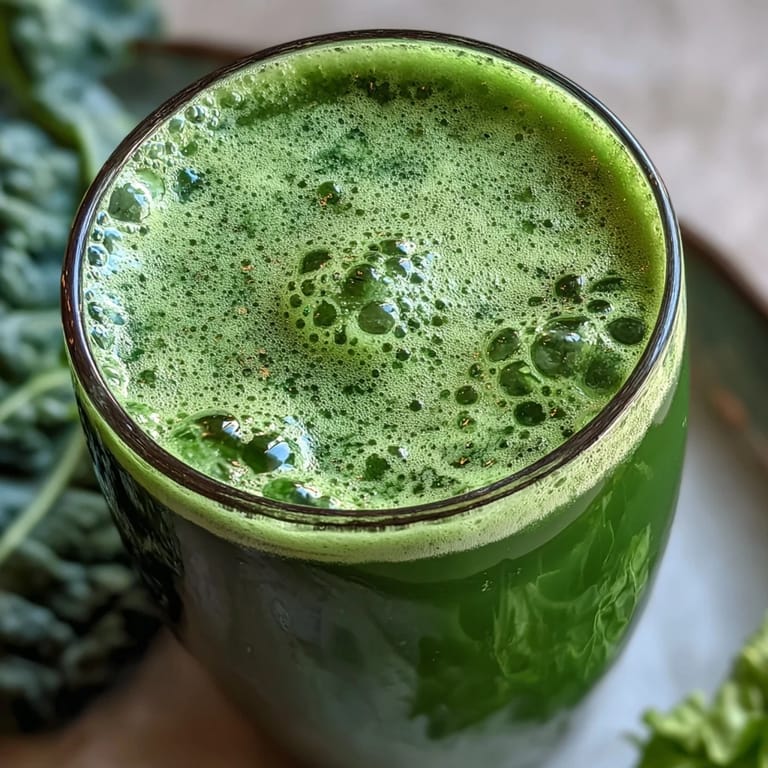
Save My juicer sat gathering dust until a friend stopped by looking absolutely exhausted, complaining about feeling sluggish after weeks of late nights. I'd just picked up a bunch of kale and cabbage at the farmers market that morning, and something made me suggest we make something green and alive together. That first sip hit differently—bright, sharp, almost electric with ginger—and watching her shoulders relax made me realize this wasn't just juice, it was a small ritual of taking care.
I made a batch for my mom when she was recovering from being under the weather, and she drank three glasses before noon. She kept saying it tasted like spring, which made me laugh because it was November, but I knew exactly what she meant—there's something about drinking something this alive that shifts your entire mood, not just your digestion.
Ingredients
- Green cabbage: The hidden MVP that adds body and genuine detoxifying compounds without any bitterness—I learned to chop it small so it feeds smoothly through the juicer without getting stuck.
- Kale leaves: Remove those woody stems or they'll gunk up your machine; the leaves are where the magic lives, packed with chlorophyll that actually makes you feel lighter.
- Cucumber: Keeps everything hydrating and cool, and peeling it first prevents that watery, slightly bitter taste that can sneak in if you skip this step.
- Celery: Adds natural saltiness that makes the whole thing taste intentional rather than like drinking grass clippings.
- Green apple: Bright enough to cut through the earthiness without turning the juice into dessert; I always core it first to avoid that slightly chalky center.
- Lemon juice: Squeeze it fresh right before blending—bottled lemon juice tastes thin and sad compared to the real thing, and the juice needs that sharp punch.
- Fresh ginger: Slice off a piece about the size of your thumb, peel it with a spoon (easier than a knife), and don't be shy—this is what makes the whole thing taste alive instead of medicinal.
- Cold water: Only if you're blending instead of juicing; it helps the blender move everything around without making the juice watery.
Tired of Takeout? 🥡
Get 10 meals you can make faster than delivery arrives. Seriously.
One email. No spam. Unsubscribe anytime.
Instructions
- Rinse everything like you mean it:
- Hold each leaf under cold water, rub the cabbage in your hands, get the grit off the cucumber—this is the one step that actually matters for safety and taste.
- Prep your produce assembly line:
- Chop everything into roughly the same size chunks so nothing gets stuck in the chute and your juicer actually pulls everything through smoothly instead of fighting you.
- Feed the machine with intention:
- If you're using a juicer, alternate between hard vegetables and leafy greens so the kale doesn't just get pushed through without extracting—ginger goes in near the end so it doesn't clog things up early on.
- Blend and strain if that's your route:
- Add everything to your blender with the water, blend until it's completely smooth (this takes longer than you think), then pour it through a fine mesh sieve and really press the pulp against the sides with the back of a spoon to get every drop of juice out.
- Taste before you serve:
- Add a tiny squeeze more lemon or a slice of ginger if it needs sharpening—you're the one drinking this, so make it exactly how you want it.
- Pour over ice and drink immediately:
- The nutrients start fading the moment you make it, so don't let it sit around looking pretty in your fridge; drink it while it's still vibrant.
 Save
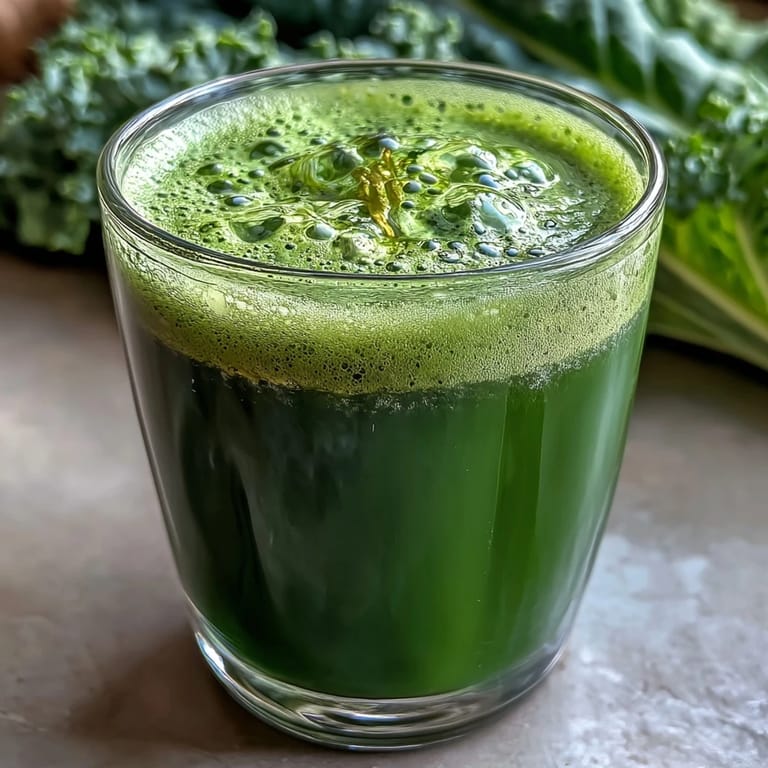
Save My partner came home one afternoon to find me standing in the kitchen at 4 p.m. with a glass of this glowing green juice, and he asked what was different about me. I hadn't realized it, but I was standing straighter, smiling without trying, my eyes maybe a little brighter—sometimes the best part of a recipe isn't the taste, it's how it makes you feel afterward.
When to Drink It and Why It Matters
The best time to drink this is first thing in the morning on an empty stomach, when your digestive system is still quiet and can actually absorb all those nutrients without competing with breakfast. I've tried drinking it mid-afternoon too, and it works, but there's something about the morning that makes it feel like you're starting clean. The ginger wakes up your metabolism, the lemon helps with digestion, and the greens give you this calm energy that's nothing like caffeine jitters—it's more like someone tucking a blanket around your insides.
What to Do With the Pulp
Don't throw away that pile of fiber that's left in your sieve—it's actually useful and it feels wasteful to compost something you could still use. I started stirring the pulp into my morning oatmeal, spreading it into crackers that I'd dehydrate, or freezing it to add to soups and stews where it disappears and adds nutrition without anyone noticing. The first time I used it in a vegetable broth, I couldn't believe how much flavor was still locked in there, just waiting to be coaxed out.
Storage and Staying Power
Fresh juice is best consumed within two hours, though I've kept it in a sealed glass jar in the coldest part of my fridge for up to a day if I absolutely had to. After about eight hours though, the color starts changing from that impossible bright green to something more muted, and the nutrients have begun their slow fade—this is biology, not a failure on your part. If you're making this to drink throughout the week, you're better off making it fresh every morning, or freezing portions in ice cube trays to blend into smoothies later on.
- Glass jars keep juice fresher longer than plastic because they don't leach flavor or allow as much air exposure.
- Fill your glass almost to the brim when storing to minimize the air space that causes oxidation.
- If you see any fizzing or smell anything slightly off, toss it—your gut will thank you for not taking chances.
 Save
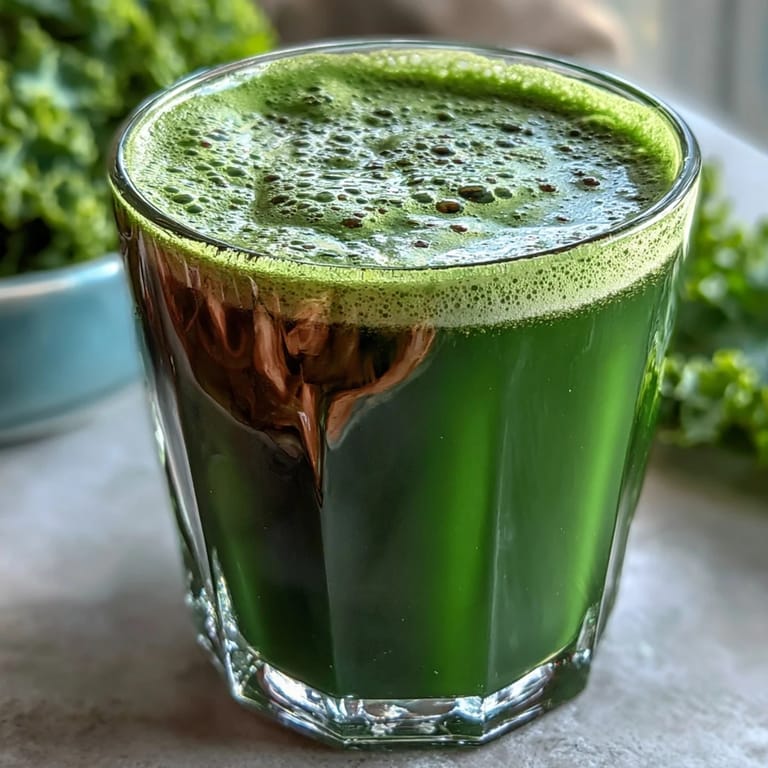
Save There's something quietly powerful about making your own juice—you know exactly what's in there, and you feel it working. This one has become part of how I take care of myself, not because I have to, but because that first sip reminds me that I'm worth the ten minutes.
Recipe FAQs
- → What are the main health benefits of this green drink?
The combination of cabbage and kale provides powerful antioxidants and essential vitamins. Ginger aids digestion and reduces inflammation, while lemon adds vitamin C and helps alkalize the body. This blend supports natural detoxification and boosts overall wellness.
- → Can I make this ahead of time?
For maximum nutritional benefits, enjoy immediately after preparation. Fresh juice begins to oxidize and lose nutrients within 15-20 minutes. If you must store it, keep in an airtight container in the refrigerator for up to 24 hours, though some nutrient loss will occur.
- → Do I need a juicer or will a blender work?
Both methods work beautifully. A juicer extracts pure liquid directly, while a blender creates a smooth mixture that requires straining. The blender method retains more fiber but yields a slightly thicker consistency until strained. Choose based on your equipment preference.
- → Why does this drink help with detoxification?
Cruciferous vegetables like cabbage and kale contain compounds that support liver function and natural cleansing processes. The combination of fiber, vitamins, and phytonutrients helps eliminate toxins while providing essential hydration. Ginger further supports digestive health during the process.
- → How can I adjust the flavor if it's too bitter?
Add an extra half apple or include a ripe pear to increase sweetness. You can also reduce the kale or cabbage slightly and increase cucumber for a milder taste. Start with less ginger and gradually increase to find your preferred spice level.