 Save
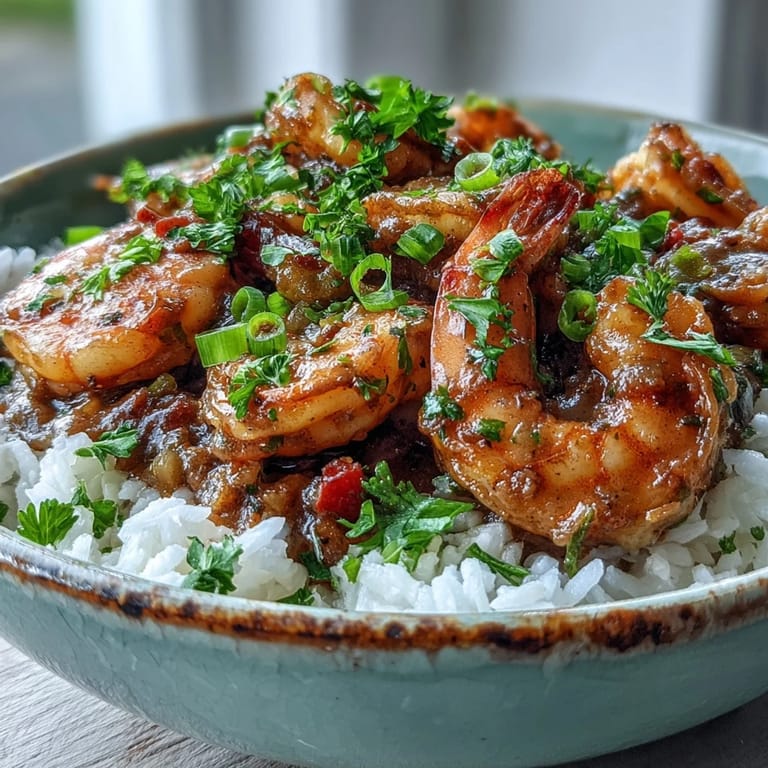
Save My neighbor's kitchen window was open one humid August evening, and the smell of dark roux drifting across the alley stopped me mid-step. She invited me in, handed me a wooden spoon, and told me to stir while she told stories about growing up near the French Quarter. That night, I learned that étouffée isn't just about following a recipe—it's about patience, the willingness to stand over a hot pot, and trusting that the roux will turn the color of melted chocolate if you just keep stirring. I've been making it ever since, and every time I do, I remember her laugh and the way she said, Don't you dare walk away from that pot.
I made this for my brother's birthday dinner last year, and he went silent after the first bite—the kind of quiet that means something hit just right. He grew up hating seafood, but the way the shrimp melted into that thick, spicy gravy changed his mind completely. By the end of the night, he was using bread to chase every last bit of sauce from his bowl. It reminded me that food has a way of rewriting old stories if you give it the chance.
Ingredients
- Vegetable oil and all-purpose flour: These two create the foundation—the roux—and you need enough fat to toast the flour slowly without scorching it.
- Onion, green bell pepper, and celery: The holy trinity of Cajun cooking, they add sweetness, earthiness, and a backbone of flavor that holds everything together.
- Garlic: Fresh garlic blooms in the hot roux and brings a sharp, aromatic punch that wakes up the whole dish.
- Shrimp: Use large or jumbo shrimp for the best texture, and don't overcook them or they'll turn rubbery—add them toward the end.
- Seafood stock: It deepens the oceanic richness, but chicken stock works in a pinch if that's what you have on hand.
- Worcestershire sauce: A splash adds umami and a hint of tang that balances the heat beautifully.
- Cajun seasoning and cayenne pepper: These bring the signature warmth and spice, but start small and build—you can always add more.
- Bay leaf: It quietly infuses the sauce with herbal depth while everything simmers together.
- Cooked white rice: The fluffy, neutral canvas that lets the étouffée shine and soaks up every drop of that gorgeous sauce.
- Green onions and parsley: Fresh, bright garnishes that cut through the richness and add a pop of color right before serving.
Tired of Takeout? 🥡
Get 10 meals you can make faster than delivery arrives. Seriously.
One email. No spam. Unsubscribe anytime.
Instructions
- Start the roux:
- Heat the oil in a heavy pot over medium heat, then whisk in the flour until smooth. This is where your patience begins—stand close and stir constantly, watching it darken slowly from pale to golden to that deep chocolate brown.
- Cook the holy trinity:
- Once your roux is ready, toss in the onion, bell pepper, and celery. The vegetables will sizzle and release their sweetness, softening into the roux and filling your kitchen with that unmistakable Cajun aroma.
- Add the garlic:
- Stir in the minced garlic and let it cook for just a minute until it's fragrant and starting to stick to the bottom of the pot. Don't let it burn or it'll turn bitter.
- Build the base:
- Pour in the seafood stock gradually, stirring to break up the thick roux and blend everything into a smooth, velvety gravy. It should coat the back of your spoon like silk.
- Season and simmer:
- Add the shrimp, Worcestershire, Cajun seasoning, cayenne, bay leaf, salt, and pepper. Bring it to a gentle simmer, then lower the heat and let it cook uncovered for 20 to 30 minutes, stirring now and then as it thickens and the shrimp turn pink and tender.
- Finish and serve:
- Taste and adjust the seasoning—add more salt, pepper, or cayenne if it needs a kick. Remove the bay leaf, then spoon the étouffée over hot rice and shower it with green onions and parsley.
 Save
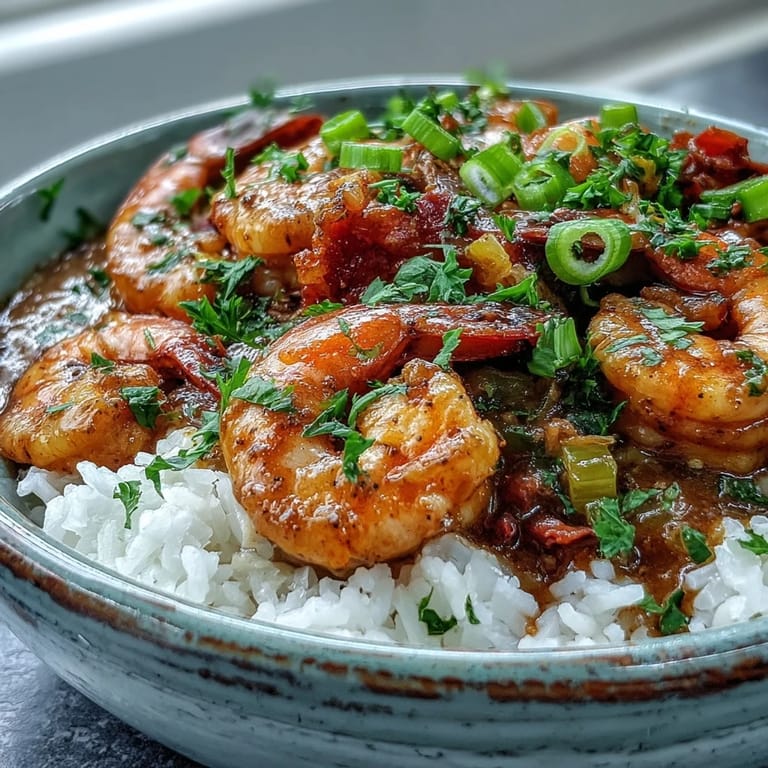
Save One rainy Sunday, I made a double batch and froze half for a night when I didn't feel like cooking. Weeks later, I reheated it after a long, exhausting day, and it tasted like a hug—rich, warm, and exactly what I needed. That's when I realized this dish isn't just for celebrations or company—it's for the nights when you need something that feels like home, even if you're eating it alone at the counter.
Storing and Reheating
Let the étouffée cool completely before transferring it to an airtight container. It'll keep in the fridge for up to three days, and honestly, it tastes even better the next day once the flavors have had time to settle in together. Reheat it gently on the stovetop over low heat, adding a splash of stock or water if it's thickened up too much. You can also freeze it for up to three months—just thaw it overnight in the fridge before reheating.
Swapping Proteins
Shrimp is classic, but crawfish is the traditional choice if you can find it fresh or frozen. I've also made this with diced chicken thighs, sliced andouille sausage, and even thick chunks of mushrooms for a vegetarian version that still carries all that smoky, spicy soul. Whatever protein you choose, just make sure it's tender and cooked through before you take the pot off the heat.
Serving Suggestions
Serve this over a mountain of fluffy white rice to soak up every bit of that dark, glossy sauce. A basket of warm, crusty French bread on the side is perfect for mopping up what the rice can't catch. If you want to round out the meal, a simple green salad with a tangy vinaigrette or some buttery cornbread will do the trick.
- Top with extra sliced green onions or a sprinkle of fresh thyme for a little extra brightness.
- Offer hot sauce on the side for anyone who wants to crank up the heat even more.
- Pair it with a cold beer or a crisp white wine to balance the richness and spice.
 Save
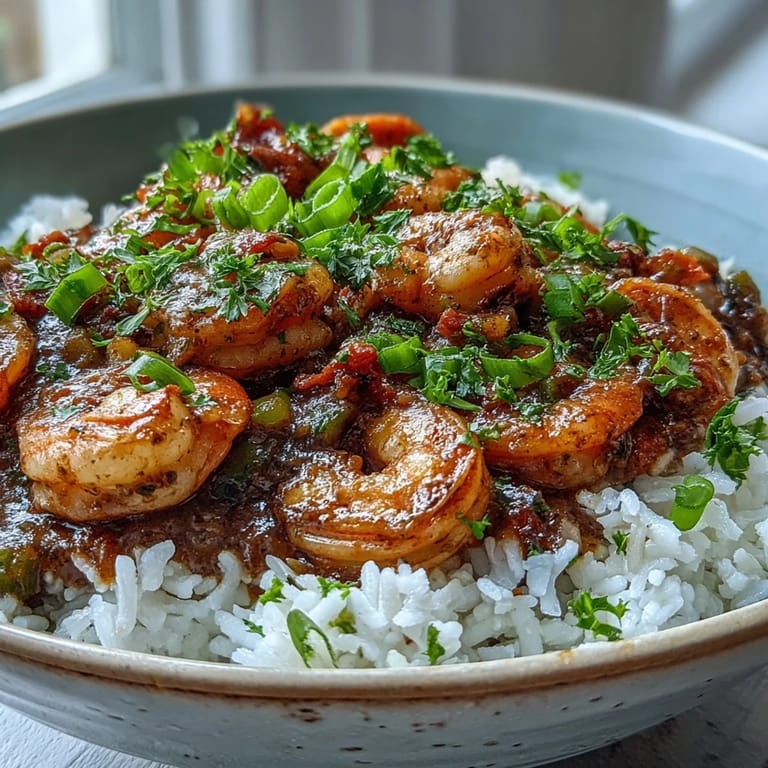
Save This étouffée has become my go-to when I want to feel like I'm somewhere warm, welcoming, and full of life. I hope it brings a little bit of that New Orleans magic into your kitchen, too.
Recipe FAQs
- → What makes a proper dark roux for étouffée?
A proper dark roux requires cooking equal parts flour and oil over medium heat for 15-20 minutes, stirring constantly until it reaches a deep chocolate brown color. This slow development creates the rich, nutty foundation that gives étouffée its distinctive depth and color.
- → Can I use crawfish instead of shrimp?
Absolutely! Crawfish are traditional in Louisiana étouffée and provide an excellent alternative to shrimp. You can substitute them pound-for-pound. The cooking time remains the same since both seafood types cook quickly and absorb the flavors beautifully.
- → How do I prevent my roux from burning?
Constant stirring is essential—never walk away from the stove. Maintain medium heat and watch the color progression carefully. If you see black specks, the roux has burned and you'll need to start over. Using a heavy pot or Dutch oven helps distribute heat evenly.
- → What is the holy trinity in Cajun cooking?
The holy trinity refers to the combination of diced onions, bell peppers, and celery that forms the aromatic base of most Cajun and Creole dishes. In this étouffée, these three vegetables are sautéed in the dark roux to build layers of flavor before adding the liquid and seafood.
- → Can étouffée be made ahead of time?
Étouffée actually improves with time and tastes even better the next day as the flavors continue to meld. Store it in the refrigerator for up to 3 days and reheat gently over low heat, adding a splash of stock if the sauce has thickened too much. Freeze for up to 3 months.
- → What should I serve with étouffée?
Classic étouffée is traditionally served over fluffy white rice, which absorbs the rich sauce perfectly. Crusty French bread is ideal for sopping up every last drop. A simple side salad with vinaigrette provides a refreshing contrast to the hearty, flavorful main dish.