 Save
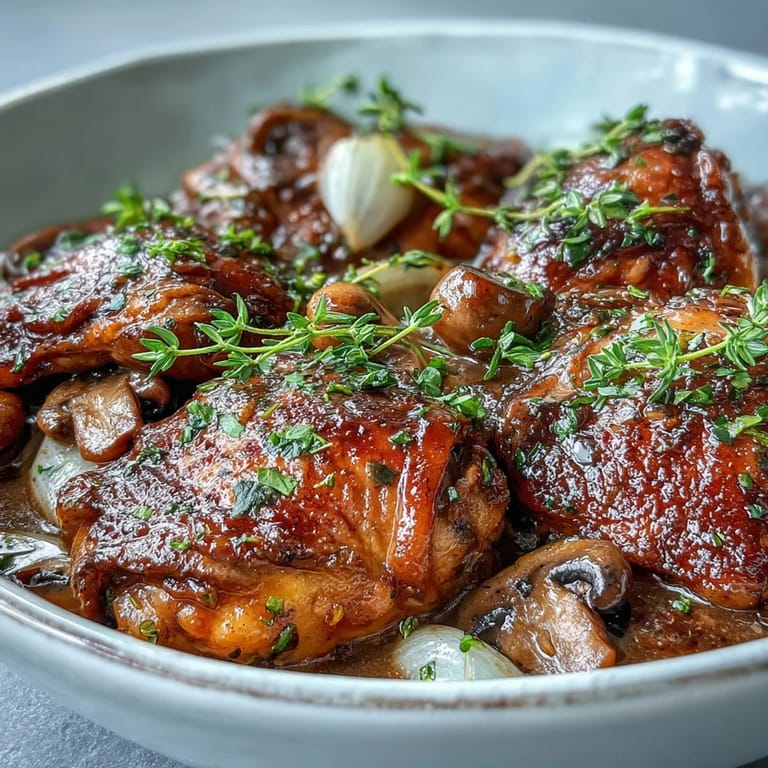
Save The first bottle of rosé I ever cooked with was a mistake. I'd grabbed it thinking it was white wine, too distracted by a phone call to notice the pale pink color until I'd already poured half into the pot. The chicken sizzled, the wine steamed, and instead of panic, I smelled something floral and surprisingly delicate. That accidental pour turned into one of my favorite ways to make coq au vin, lighter than the red wine version but just as soul-satisfying.
I made this for a small dinner party once, and my friend Claire, who usually avoided anything too fancy, went quiet after her first bite. She looked up and said it tasted like eating a French countryside sunset. I still think about that description every time I stir the cream into the pot and watch the sauce turn glossy and pale rose.
Ingredients
- Bone-in, skin-on chicken pieces: The bones add flavor to the sauce as it simmers, and the skin crisps beautifully during browning, so don't skip either.
- Dry rosé wine: Use something you'd actually drink, not cooking wine from a dusty shelf, because its flavor becomes the heart of the dish.
- Olive oil: This helps the chicken brown without burning and adds a faint fruity note that complements the wine.
- Onion, garlic, carrots, and leek: These aromatics melt into the sauce, adding sweetness and depth that balance the acidity of the wine.
- Cremini or button mushrooms: Quartered mushrooms soak up the sauce and add an earthy texture that makes every bite more interesting.
- Tomato paste: A small amount deepens the color and adds a subtle umami backbone without making the dish taste like tomatoes.
- All-purpose flour: Optional, but it helps thicken the sauce just enough to coat the back of a spoon without feeling heavy.
- Heavy cream: This transforms the braising liquid into a luxurious sauce with a velvety finish.
- Bay leaf, thyme, and rosemary: Fresh herbs are best here, they perfume the pot and make your kitchen smell like a French bistro.
- Salt and black pepper: Season generously at every stage, the chicken, the vegetables, and the final sauce, to build layers of flavor.
- Fresh parsley: A bright, grassy finish that cuts through the richness and makes the dish look alive on the plate.
Tired of Takeout? 🥡
Get 10 meals you can make faster than delivery arrives. Seriously.
One email. No spam. Unsubscribe anytime.
Instructions
- Season and prep the chicken:
- Pat each piece completely dry with paper towels so the skin browns instead of steams, then season both sides with salt and pepper. Dry skin is the secret to that golden, crispy exterior.
- Brown the chicken in batches:
- Heat the olive oil until it shimmers, then lay the chicken skin-side down without crowding the pot. Let it sizzle undisturbed for about 5 minutes until the skin releases easily and turns deep golden.
- Sauté the aromatics:
- In the same pot with all those browned bits, add the onions, carrots, and leek, stirring occasionally until they soften and smell sweet. Toss in the mushrooms and cook until they start to release their moisture.
- Build the flavor base:
- Stir in the garlic and let it bloom for a minute, then add the tomato paste and cook it until it darkens slightly and smells caramelized.
- Thicken with flour:
- If using flour, sprinkle it over the vegetables and stir to coat everything evenly. This step helps the sauce cling to the chicken later.
- Deglaze with rosé:
- Pour in the wine and scrape up all the caramelized bits stuck to the bottom of the pot, they're pure flavor. Nestle the browned chicken back in, then tuck in the bay leaf, thyme, and rosemary.
- Simmer until tender:
- Bring everything to a gentle bubble, cover the pot, and lower the heat to a lazy simmer. Let it cook for 45 minutes, until the chicken is so tender it almost falls off the bone.
- Finish with cream:
- Fish out the herb sprigs and bay leaf, then stir in the cream. Simmer uncovered for 5 to 10 minutes, watching the sauce turn glossy and thick enough to coat a spoon.
- Garnish and serve:
- Taste and adjust the seasoning, then scatter fresh parsley over the top. Serve it in shallow bowls with something to soak up every drop of that sauce.
 Save
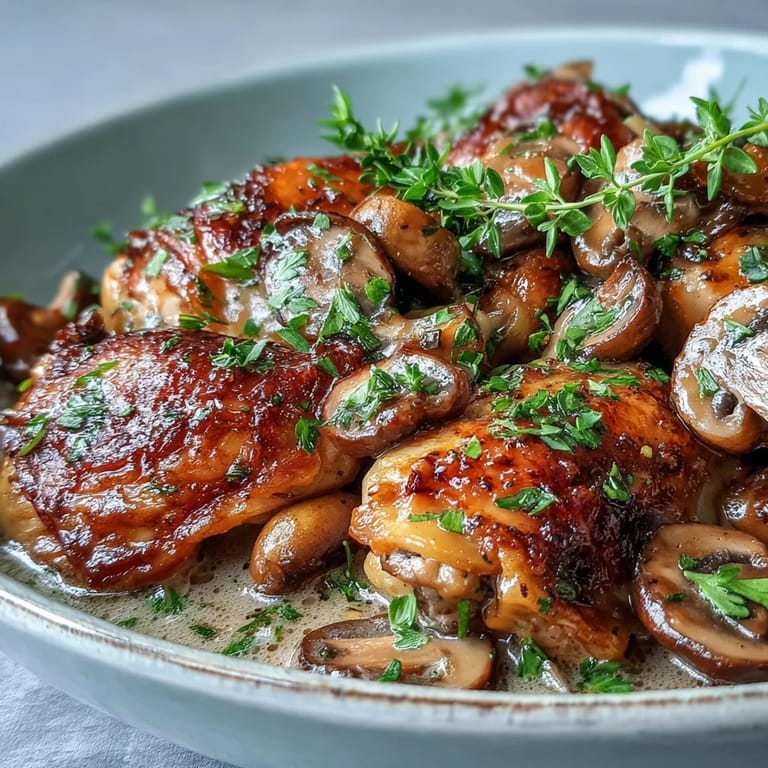
Save One cold evening, I served this with a pile of buttered potatoes and watched my partner drag his fork through the sauce, soaking up every last bit. He didn't say much, just kept eating, and when his plate was empty he looked up and asked if there was more. That's when I knew this dish had earned its place in our regular rotation.
What to Serve Alongside
Buttered boiled potatoes are my go-to because they soak up the sauce without competing for attention. Crusty bread works just as well if you want something you can tear apart and dip. For a lighter option, serve it over rice or a tangle of buttered egg noodles.
How to Store and Reheat
This dish tastes even better the next day after the flavors have had time to marry. Let it cool completely, then store it in an airtight container in the fridge for up to three days. Reheat gently on the stovetop over low heat, adding a splash of stock or cream if the sauce has thickened too much.
Making It Your Own
For a richer, more complex flavor, add a splash of cognac after browning the chicken and let it bubble away before adding the wine. If you want to stretch the dish, use a mix of rosé and chicken stock instead of all wine. You can also swap the heavy cream for crème fraîche for a tangier finish, or use half-and-half if you want to lighten it up.
- Add pearl onions in the last 20 minutes of simmering for a more traditional coq au vin look.
- Toss in a handful of frozen peas right before serving for a pop of color and sweetness.
- Finish with a squeeze of lemon juice to brighten the sauce if it tastes too rich.
 Save
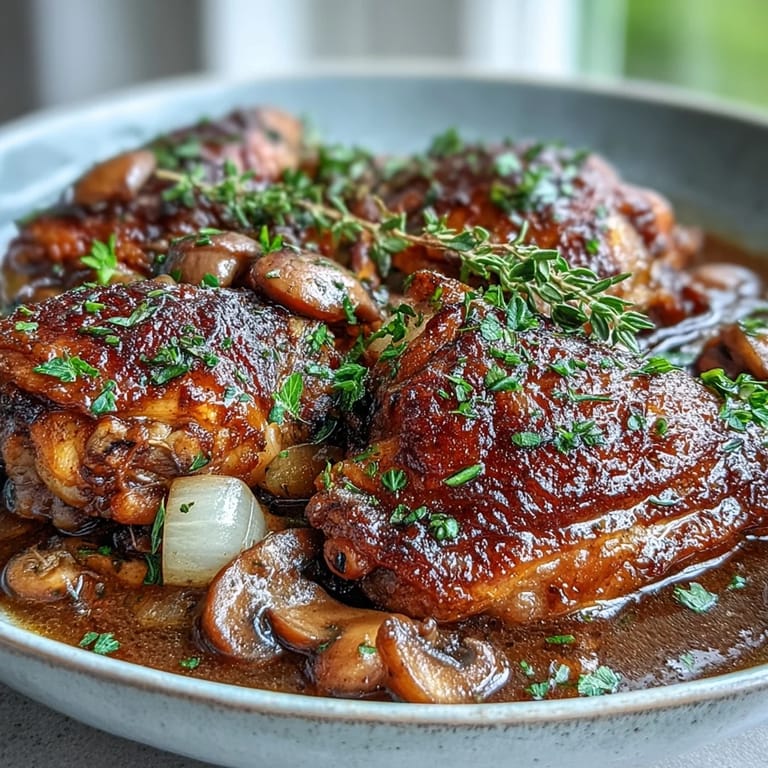
Save This is the kind of dish that makes you slow down and savor every bite, and it never fails to make an ordinary evening feel a little more special. I hope it brings you as much comfort and quiet joy as it's brought me.
Recipe FAQs
- → Can I use chicken breasts instead of thighs and drumsticks?
Yes, but bone-in, skin-on thighs and drumsticks are recommended for richer flavor and tenderness during the braising process. If using breasts, reduce cooking time to prevent drying out.
- → What type of rosé wine works best for this dish?
Choose a dry rosé wine with good acidity. Avoid sweet or overly fruity rosés. A Provence-style rosé or a dry Spanish rosado work excellently for braising.
- → Can I make this dish ahead of time?
Absolutely. The flavors deepen when made a day ahead. Prepare through step 8, cool completely, refrigerate, and gently reheat before serving. Add fresh parsley just before plating.
- → How can I make this dairy-free?
Substitute the heavy cream with coconut cream or a dairy-free cashew cream. The sauce will still be rich and velvety without compromising the overall flavor profile.
- → What can I serve alongside this dish?
Buttered fingerling potatoes, creamy mashed potatoes, crusty French bread, or steamed rice all complement the rich sauce beautifully. A simple green salad provides a fresh contrast.
- → Do I need to marinate the chicken beforehand?
No marinating is necessary. The chicken develops deep flavor through browning and the slow braising process in the rosé wine with aromatics and vegetables.