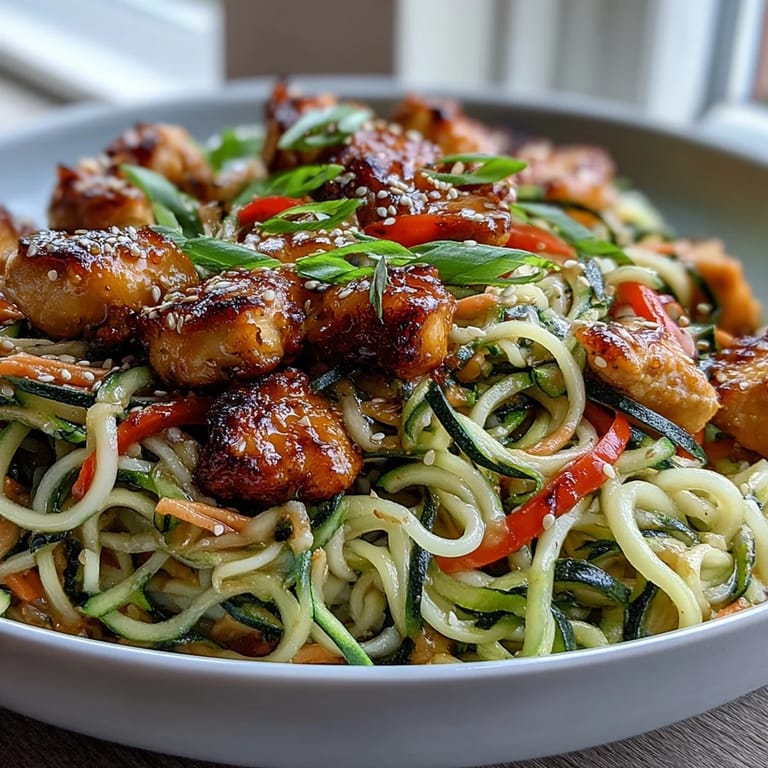
 Save
Save There was this Tuesday evening when I'd promised myself I'd eat better, but I didn't want to sacrifice the kind of food that actually tastes like dinner. That's when zucchini noodles stopped being a sad substitute and became something I genuinely craved, especially when paired with chicken and that glossy, ginger-forward sauce that makes your kitchen smell like a proper Asian restaurant. The whole thing comes together faster than takeout, and you actually know what's in every bite.
I made this for my friend who'd just started a low-carb thing and was genuinely miserable about it. Watching her face when she realized this wasn't some depressing bowl of rabbit food, that it actually had flavor and substance and made her feel full and satisfied, that's when I knew this recipe was the real deal. She's made it three times since then.
Ingredients
- Chicken breast, thinly sliced (500 g): Slice it against the grain so each piece stays tender, and keeping it thin means it cooks in minutes without drying out.
- Zucchini, spiralized (3 medium): Fresh zucchini works beautifully; if you don't have a spiralizer, a julienne peeler does the job and feels kind of meditative to use.
- Red bell pepper, thinly sliced (1 large): The color matters here both visually and for the subtle sweetness that balances the savory sauce.
- Carrots, julienned (2 medium): They add a gentle crunch and a touch of natural sweetness that rounds out all the ginger and garlic.
- Red onion, thinly sliced (1 small): Raw onion has this sharp, almost floral quality that keeps everything tasting bright.
- Garlic and ginger (2 cloves and 1 tablespoon): These two are the backbone of the whole flavor profile; don't skip them or go easy on them.
- Green onions (2, sliced): The fresh garnish at the end reminds you that this dish is alive and vibrant.
- Low-sodium soy sauce or tamari (3 tablespoons): Tamari is your gluten-free friend, and the low-sodium version keeps everything balanced.
- Sesame oil (1 tablespoon): This is the magic ingredient that makes everything taste like it came from a proper kitchen, not a quick weeknight thrown-together situation.
- Rice vinegar (1 tablespoon): It cuts through the richness and adds just enough brightness to keep your palate interested.
- Honey or maple syrup (1 tablespoon): A touch of sweetness rounds out the sauce without making it cloying.
- Cornstarch (1 teaspoon, optional): Use this if you like your sauce slightly thickened and clinging to everything; skip it if you prefer something lighter and more fluid.
- Chili flakes (1/2 teaspoon, optional): A whisper of heat that builds without overwhelming; add more if you like things spicier.
- Olive oil or neutral cooking oil (1 tablespoon): This is just for the pan; don't use sesame oil for the initial cooking since it burns too easily.
- Salt and black pepper: Taste as you go because every piece of produce has a slightly different water content and will need different seasoning.
Tired of Takeout? 🥡
Get 10 meals you can make faster than delivery arrives. Seriously.
One email. No spam. Unsubscribe anytime.
Instructions
- Mix your sauce first:
- Whisk together soy sauce, sesame oil, rice vinegar, honey, cornstarch if using, and chili flakes in a small bowl. This way it's ready to go when you need it, and the cornstarch has time to distribute evenly instead of getting lumpy.
- Get the pan screaming hot:
- Heat olive oil in a large skillet or wok over medium-high heat until it shimmers slightly. You want it hot enough that the chicken hits the pan and immediately starts browning, not steaming.
- Cook the chicken until it's golden:
- Add sliced chicken in a single layer, season lightly, and let it sit for about 2 minutes before stirring. This is how you get that golden crust instead of pale, steamed chicken; it takes about 4-5 minutes total. Remove it to a clean plate once it's cooked through.
- Build your flavor base with aromatics:
- In the same skillet, add minced garlic, grated ginger, and sliced red onion. Stir constantly for about 1 minute until the smell hits you and you know everything is waking up. Don't let the garlic brown or it turns bitter.
- Get the harder vegetables going:
- Add carrots and bell pepper, keep the heat high, and stir-fry for 2-3 minutes. You want them to have a slight bite still, not soft; they'll continue cooking a tiny bit even after you remove the pan from heat.
- Add the zucchini noodles with intention:
- This is the critical moment: add the spiralized zucchini and stir everything together for just 1-2 minutes. If you cook them any longer, they release water and turn into a soggy mess, so watch the clock and trust your instincts.
- Bring it all back together:
- Return the cooked chicken to the skillet, pour in your prepared sauce, and toss everything for 1-2 minutes. The sauce will coat everything beautifully, and if you used cornstarch, you'll see it thicken just slightly.
- Taste and adjust:
- Before plating, taste a bite and decide if it needs more salt, a squeeze of brightness, or another pinch of chili flakes. This is your dish, so make it exactly how you like it.
- Serve immediately while everything's still warm:
- Divide among bowls, scatter green onions on top, and eat right away. The zucchini noodles are best enjoyed fresh, and the warmth of the bowl will make the sauce smell incredible.
 Save
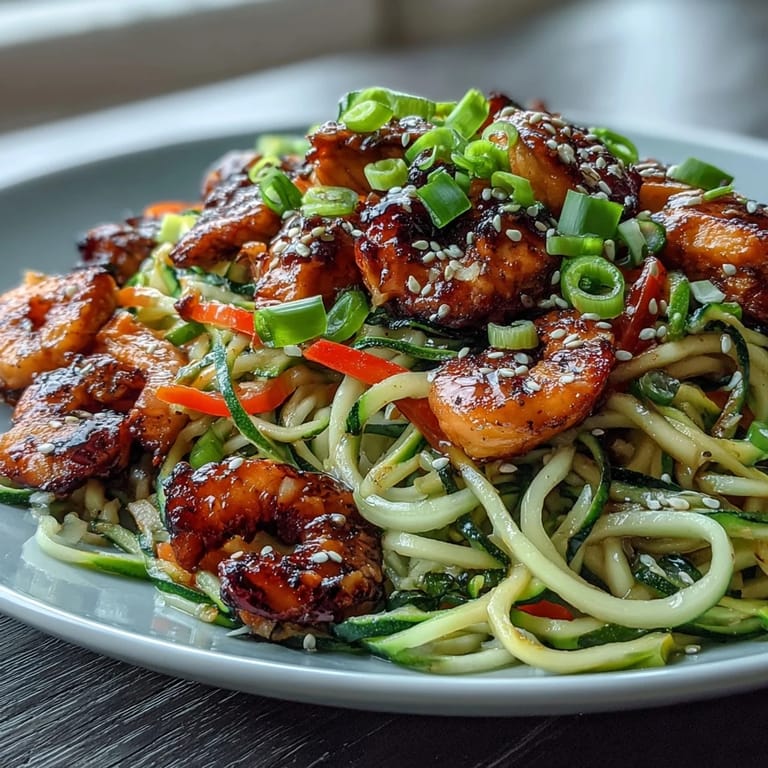
Save There's something about the moment when all those fresh vegetables are still slightly warm, the sauce is glossy and clinging to everything, and the room smells like sesame oil and ginger that reminds you that eating well doesn't have to mean eating boring. This dish became the thing I make when I want to feel genuinely nourished, not just fed.
Why This Works as Weeknight Dinner
Most stir-fries feel like they require you to have your mise en place completely prepped and arranged before you even turn on the heat, which sounds lovely in theory but exhausting in practice. This one lets you chop as you go because everything cooks in stages, and the total time from 'I'm hungry' to 'I'm eating' is genuinely half an hour. The key is that the sauce comes together in 30 seconds, and once the chicken is cooked, the rest is just organized vegetable shuffling.
Customizing It to Your Mood
The beauty of this recipe is that it's more of a template than a rigid formula. Some nights I add a handful of baby bok choy or snap peas if I have them. Other times I use shrimp instead of chicken, which cooks even faster and has this delicate sweetness that plays beautifully with the ginger. You can dial the heat up or down with chili flakes, swap the honey for a touch more vinegar if you want it sharper, or add a teaspoon of fish sauce if you want it to taste even more like proper Southeast Asian cooking.
The Sauce Secret
That glossy sauce is really just five simple things that happen to work in perfect harmony: salty-savory from soy sauce, nutty and warm from sesame oil, bright from rice vinegar, a whisper of sweetness from honey, and optional heat from chili flakes. What makes it feel special is the balance, and honestly, the real secret is tasting as you build it. If one element feels too loud, you can usually fix it by adding just a little more of something else; a tiny splash more vinegar brings everything into focus, or a touch more honey mellows it out.
- Make the sauce ahead of time if you're cooking for guests; it keeps for days in the fridge and actually tastes better when the flavors have had time to marry.
- If your sauce seems too thin after the first minute of tossing, that's actually fine because the zucchini noodles are still releasing just a tiny bit of moisture.
- Cornstarch is optional, but if you're using it, mix it with a splash of cold water first so it doesn't clump when it hits the hot pan.
 Save
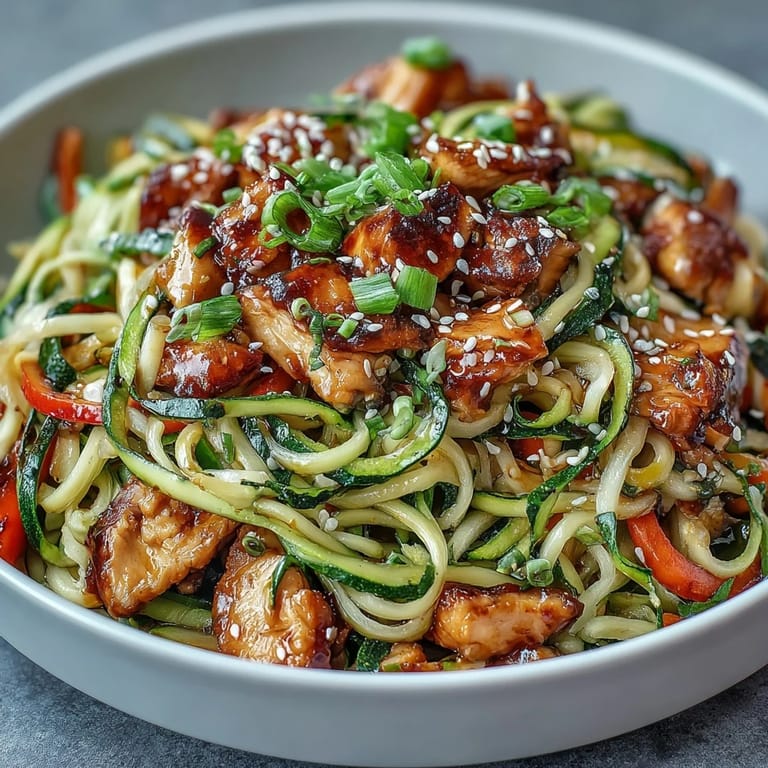
Save This dish taught me that healthy eating isn't about deprivation or replacement; it's about building something genuinely delicious that happens to be good for you. Make it once, and it becomes part of your rotation forever.
Recipe FAQs
- → How do I prevent zucchini noodles from getting soggy?
Cook them briefly, about 1-2 minutes, stirring just until they start to soften but remain firm, avoiding excess moisture.
- → Can I substitute chicken with other proteins?
Yes, tofu or shrimp work well for similar textures and flavors in this stir fry.
- → What sauce ingredients create the flavor balance?
A mix of low-sodium soy sauce or tamari, sesame oil, rice vinegar, and a touch of honey provides savory, nutty, tangy, and sweet notes.
- → Is this dish suitable for gluten-free diets?
Use tamari instead of soy sauce to ensure gluten-free compatibility.
- → What cooking tools are essential for this dish?
A spiralizer or julienne peeler for zucchini noodles, a skillet or wok for stir-frying, and standard kitchen knives are needed.