 Save
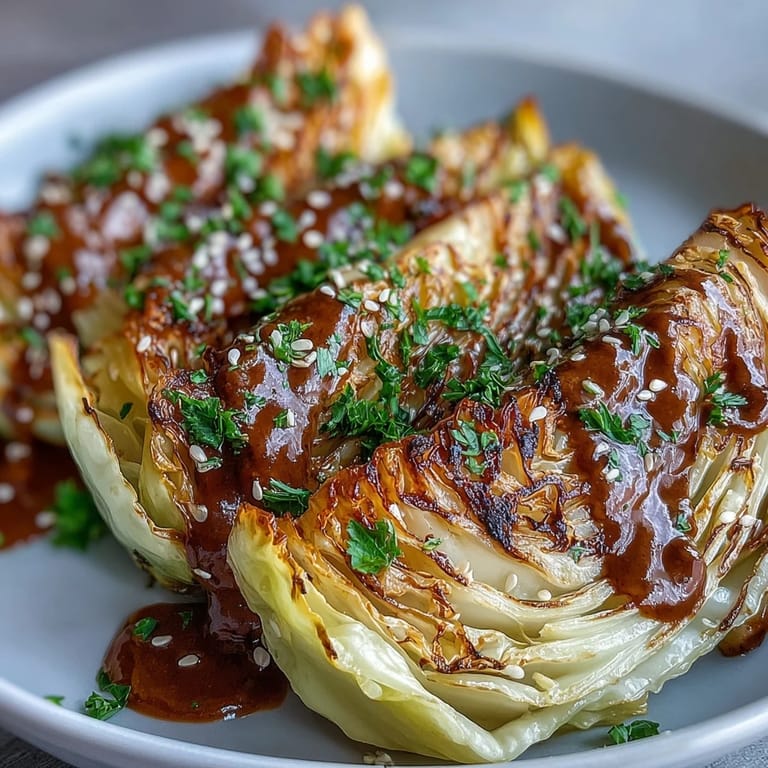
Save There's this moment when roasted cabbage transforms from something you'd only eat out of obligation into something you actually crave—and it happened to me on a rainy Tuesday when I had three vegetables and no real plan. I'd just bought a gorgeous head of green cabbage at the farmers market, and instead of turning it into soup or slaw like usual, I decided to slice it into wedges and roast it until the edges turned golden and crispy. The smell that filled my kitchen was nothing short of magical, and when I drizzled it with a tahini sauce I'd hastily thrown together, everything clicked into place.
I made this for my partner's coworkers who were stopping by for a casual dinner, and honestly, I was nervous about serving roasted cabbage as a side dish—it felt almost too simple. But watching people go back for thirds, asking for the recipe, hearing them debate whether this could be a main course instead of a side dish, that's when I knew I'd stumbled onto something special. One person even said it tasted like something they'd order at a restaurant, which made me laugh because it had taken me maybe fifteen minutes of actual hands-on time.
Ingredients
- 1 medium green cabbage (about 2 lbs), cut into 8 wedges with core intact: Keeping the core in holds each wedge together while roasting, and it becomes tender and sweet as it cooks—don't skip this step.
- 2 tbsp olive oil: Good quality oil makes a difference here since it's one of the few ingredients, but don't feel pressured to use your most expensive bottle.
- 1/2 tsp kosher salt and 1/4 tsp freshly ground black pepper: Season generously because the cabbage will shrink as it roasts, and you need enough seasoning to carry through.
- 1/3 cup tahini: The nutty, creamy base of your sauce—make sure you give it a good stir because the oil separates as it sits.
- 1 small garlic clove, finely grated: Grating instead of mincing gives you a smoother, more integrated garlic flavor that won't overpower the delicate tahini.
- 2 tbsp fresh lemon juice: Fresh is absolutely worth it here; bottled lemon juice will taste thin and flat by comparison.
- 2–4 tbsp cold water: Start with two and add more gradually until you reach a pourable consistency—tahini can go from silky to grainy if you're impatient with the water.
- 1/4 tsp ground cumin and 1/4 tsp kosher salt: These warm spices anchor the sauce and prevent it from feeling one-dimensional.
- Toasted sesame seeds, fresh parsley or cilantro, smoked paprika or Aleppo pepper (optional garnish): The optional parts that actually aren't optional if you want this to feel restaurant-worthy.
Tired of Takeout? 🥡
Get 10 meals you can make faster than delivery arrives. Seriously.
One email. No spam. Unsubscribe anytime.
Instructions
- Heat your oven and prep your workspace:
- Preheat to 425°F and line a baking sheet with parchment paper—this prevents sticking and makes cleanup effortless. The high heat is what gives you those golden, crispy edges.
- Arrange and season your cabbage:
- Place wedges on the sheet, drizzle with olive oil, and sprinkle with salt and pepper, making sure to season both sides. Don't crowd the pan because the cabbage needs space to caramelize rather than steam.
- Roast until golden and tender:
- Pop it in the oven for 25–30 minutes, flipping halfway through so both sides get that gorgeous color. You'll know it's done when the outer edges are dark golden and a fork slides through the flesh easily.
- Make your tahini sauce while cabbage roasts:
- Whisk tahini, grated garlic, lemon juice, cumin, and salt together in a bowl until combined. Slowly drizzle in cold water while whisking constantly, adding just a tablespoon at a time, until the sauce loosens into something pourable and smooth.
- Assemble and serve:
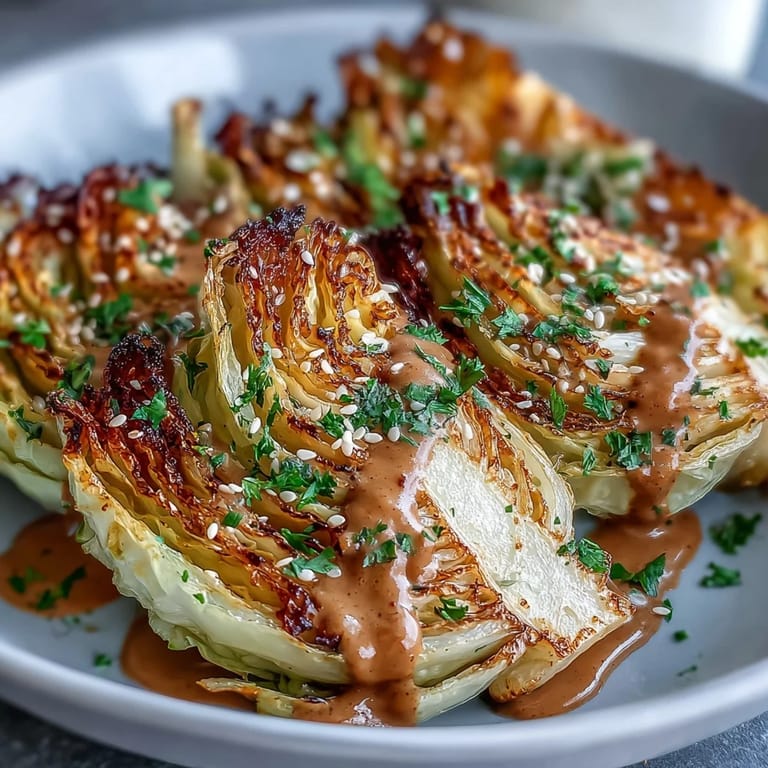
- Transfer warm cabbage wedges to a platter, pour the tahini sauce over generously, and finish with sesame seeds, fresh herbs, and a pinch of smoked paprika. Serve warm or at room temperature—both are equally delicious.
 Save
Save There's something deeply satisfying about taking an ingredient most people overlook and turning it into something people actually want seconds of. This dish does that—it takes cabbage off the boring side dish list and makes it shine, which is the kind of quiet culinary victory that makes home cooking feel worthwhile.
The Magic of Roasting Vegetables
Roasting at high heat fundamentally changes how vegetables taste by concentrating their natural sugars and creating browning that adds depth and complexity. With cabbage specifically, the outer leaves become almost candy-like while staying connected to the tender heart, which is why you don't want to chop it into small pieces or let it cool completely before eating. The transformation happens in those last few minutes of cooking, so if you peek at thirty minutes and it doesn't look golden enough yet, give it another few minutes—patience pays off here.
Understanding Tahini Sauce
Tahini sauce intimidates people because it seems like it should separate or break, but it's actually one of the most forgiving sauces once you understand the ratio. The key is treating the water like you're making mayo—add it slowly while whisking so the paste gradually loosens rather than seizing up. I learned this after my first attempt, when I dumped all the water in at once and ended up with something grainy and disappointing, but every batch since then has been smooth and silky.
Serving and Customizing
This dish works as a standalone side, a vegetable-forward main with rice or grains, or even as part of a larger spread with other roasted vegetables and proteins. The tahini sauce is truly the star, so don't hold back when drizzling—it's meant to be generous and luxurious. For heat lovers, Aleppo pepper or chili flakes add complexity without overwhelming the dish, while pomegranate seeds or a squeeze of fresh lime brighten everything up if you're in the mood for something lighter.
- Make the tahini sauce up to two days ahead and store it in the refrigerator, then bring it to room temperature before serving so it tastes its best.
- Red cabbage will work beautifully here though it may take a few extra minutes to roast, and it'll stain your cutting board but taste equally delicious.
- Leftovers stay good for three days and actually taste better the next day once flavors have had time to settle and deepen.
 Save
Save This recipe taught me that the simplest dishes often deliver the most pleasure, especially when you take your time with technique and don't apologize for serving vegetables as the main event. Make this soon, and watch what happens when people taste roasted cabbage wedges for the first time.
Recipe FAQs
- → How do I know when the cabbage is done roasting?
The cabbage wedges are ready when edges are deeply browned and caramelized, about 25-30 minutes at 425°F. They should feel tender when pierced with a fork but still hold their shape. Flip halfway through for even browning.
- → Why does my tahini sauce sometimes seize up?
Tahini sauce can thicken suddenly when mixing—this is normal. Simply continue whisking and gradually add more cold water, one tablespoon at a time, until it reaches a smooth, pourable consistency. The sauce will transform from thick to silky.
- → Can I use red cabbage instead of green?
Absolutely! Red cabbage works beautifully and adds vibrant color to the final dish. Note that red cabbage may take slightly longer to cook through—extend roasting time by 5-10 minutes and test for tenderness.
- → What can I serve with roasted cabbage wedges?
These pair wonderfully with grilled chicken, lamb kebabs, or roasted fish. For a vegetarian meal, serve alongside warm pita bread, hummus, and quinoa. The tahini sauce also complements roasted cauliflower, carrots, or sweet potatoes.
- → How do I store and reheat leftovers?
Store cabbage wedges and sauce separately in airtight containers in the refrigerator for up to 4 days. Reheat cabbage in a 350°F oven for 10-15 minutes to restore crispness. The tahini sauce keeps well—just give it a good whisk before serving.
- → Can I make the tahini sauce ahead of time?
Yes! The tahini sauce actually benefits from resting—the flavors meld and become more harmonious. Make it up to 3 days in advance and store it in the refrigerator. You may need to add a splash of water when ready to serve, as it thickens when chilled.