 Save
Save My neighbor knocked on the door one freezing February afternoon with a thermometer reading and a desperate look. She'd caught something awful, and I found myself instinctively reaching for chicken, carrots, and whatever broth I had on hand. That soup turned into something almost medicinal the way it steamed in her hands, and she later told me it was the first meal she could actually taste again. Now whenever the temperature drops or someone sounds off in a text, this is what I make.
I learned to make this properly during a particularly quiet winter when cooking became my main conversation with myself. The kitchen would fill with that particular smell of sautéed onions and garlic hitting warm broth, and it felt like the house was finally breathing again. Something about ladling it into bowls and watching the steam rise made every other problem feel smaller, at least for a little while.
Ingredients
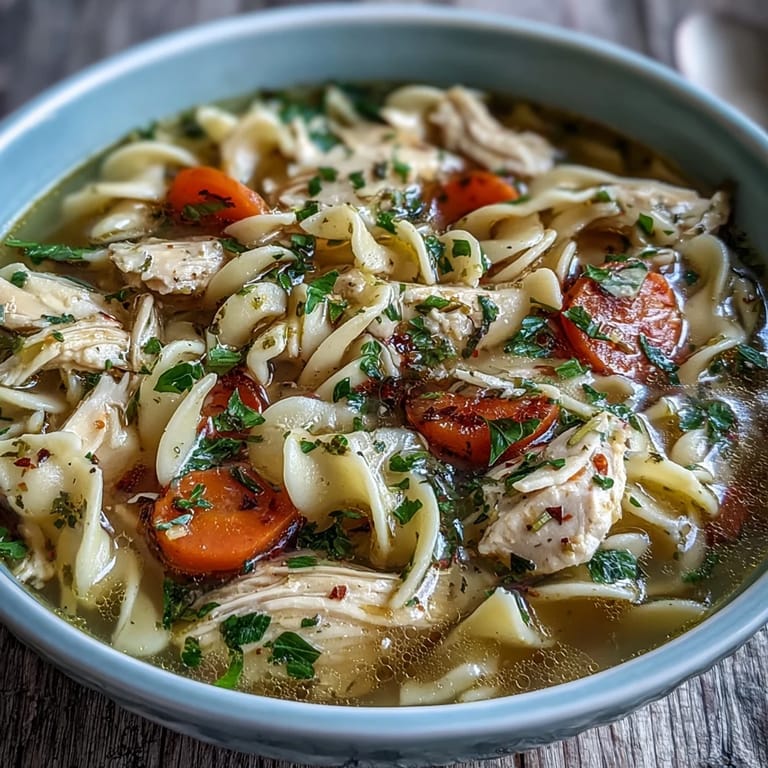
- Boneless, skinless chicken breasts (2, about 350g), diced: Cut them into bite-sized pieces so they cook quickly and distribute evenly through each spoonful; this isn't about large chunks but tender, easy-to-eat comfort.
- Medium onion (1), diced: This is your flavor foundation, so don't rush the dicing and definitely don't skip the sautéing step where it softens and turns slightly golden.
- Medium carrots (2), peeled and sliced: The sweetness balances the savory broth, and slicing them (rather than chunking) means they actually soften in the time the noodles need.
- Celery stalks (2), sliced: This adds a subtle earthiness that makes people wonder what you did differently, and the answer is usually just not forgetting the celery.
- Garlic cloves (2), minced: The moment you add this is when the whole kitchen changes its smell; don't let it brown or it turns bitter and regretful.
- Low-sodium chicken broth (1.5 liters or 6 cups): Low-sodium lets you control the salt and prevents that metallic tang that can creep in from oversalted commercial broths.
- Egg noodles (120g or 4 oz): These small, tender spirals absorb the broth beautifully and feel nostalgic in a way that fancy pasta shapes just don't.
- Bay leaf (1): This little leaf works quiet magic in the background; remove it before serving or it might startle someone.
- Dried thyme (1/2 teaspoon): A pinch of this herbaceous note keeps things from tasting too one-dimensional.
- Dried parsley (1/2 teaspoon plus extra for garnish): The dried version goes into the pot for subtle flavor, while fresh parsley scattered on top at the end feels like a small gift.
- Salt and freshly ground black pepper, to taste: Always taste before the final bowl; sometimes the broth is saltier than expected and you need to adjust.
- Olive oil (2 tablespoons): This is your starting point for getting those vegetables soft and fragrant before anything else happens.
Tired of Takeout? 🥡
Get 10 meals you can make faster than delivery arrives. Seriously.
One email. No spam. Unsubscribe anytime.
Instructions
- Warm your pot and start the vegetables:
- Pour the olive oil into a large pot and let it heat over medium until you can smell it faintly and a piece of onion sizzles on contact. Add the diced onion, carrots, and celery all at once, stirring them around with a wooden spoon until they're coated and beginning to soften; this takes about 4 to 5 minutes and fills your kitchen with the most welcoming smell.
- Add the aromatic layers:
- Stir in the minced garlic and let it cook for exactly one minute, no more or the flavor turns sharp and acrid. You'll know it's ready when the raw bite of garlic disappears and something warm and mellow takes its place.
- Introduce the chicken:
- Add the diced chicken pieces to the pot, stirring frequently as they cook for about 3 to 4 minutes until the pink disappears from the surface. Don't worry about them being fully cooked through yet; the broth will finish that job.
- Build the broth base:
- Pour in all the chicken broth, then add the bay leaf, thyme, parsley, and a generous pinch of salt and pepper. Stir everything together and watch for the moment when small bubbles start clustering around the edges, then a few break the surface; that's your gentle boil.
- Simmer and develop flavor:
- Turn the heat down to low or medium-low and let everything bubble very gently for 10 minutes, which gives the dried herbs time to release their flavors and the chicken to fully cook through.
- Add the noodles:
- Scatter the egg noodles across the surface and stir them in with a wooden spoon, making sure they sink and distribute evenly. Simmer for another 8 to 10 minutes, stirring occasionally, until the noodles are tender and the chicken is completely cooked.
- Finish and serve:
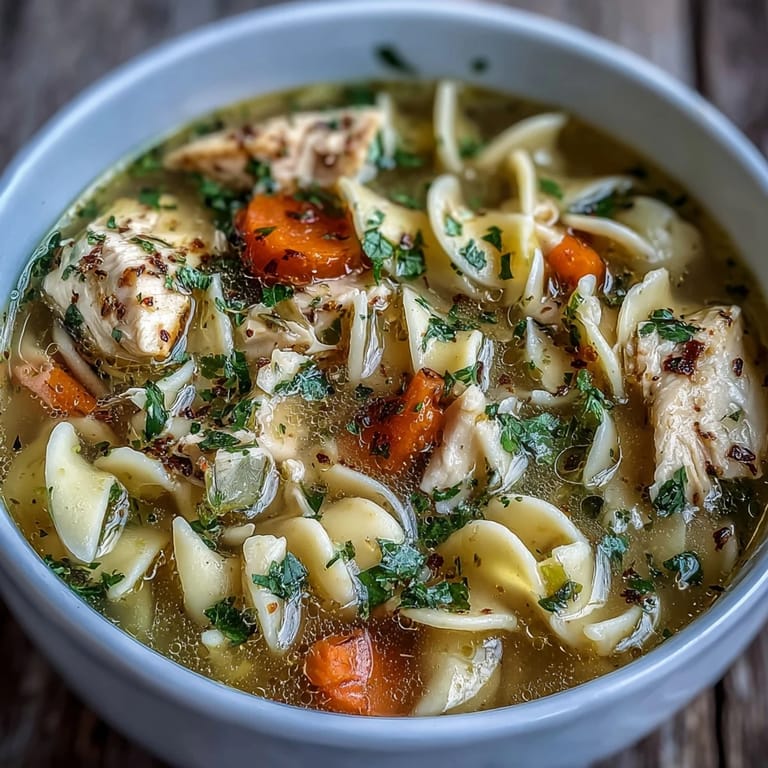
- Fish out and discard the bay leaf, then taste the soup carefully with a spoon and adjust the salt and pepper to your preference. Ladle into bowls and scatter fresh parsley on top like you're adding a small flourish of green to something that already tastes like home.
 Save
Save  Save
Save There's a particular moment when someone walks in, pauses, and asks what smells so good, and you realize you've created something that registers as comfort before it even touches their tongue. That's when you know this soup has done its job, and it's why I keep making it.
Why This Soup Works
The magic isn't in complexity or exotic ingredients; it's in the simplicity that lets each component shine. The chicken stays tender because you're not overcooking it, the vegetables soften at exactly the right pace, and the broth carries all the flavors without drowning them. This is the kind of recipe that reminds you why people have been making soup the same way for generations.
Small Changes That Matter
A squeeze of lemon juice right before serving brightens everything and makes people wonder why it tastes so much more alive than they expected. Some days I add a tiny splash of white wine to the broth while the vegetables are still cooking, and it adds a subtle depth that's easy to miss but somehow keeps you coming back for another spoonful. If you have fresh thyme instead of dried, use three times as much and add it in the last few minutes so it doesn't fade away into nothing.
Serving and Storage
Serve this soup in whatever bowls make you happiest, ideally with crusty bread on the side for soaking up every last bit of broth. It keeps in the refrigerator for three days and actually tastes even better the next day when the flavors have had time to get to know each other. Freezer storage works too, though the noodles get softer; if you're planning to freeze it, cook the noodles just shy of fully done and let them finish cooking when you reheat.
- Don't skip the fresh parsley garnish at the end; it's the final note that makes everything feel intentional.
- If someone has gluten issues, swap in gluten-free noodles and everything works exactly the same way.
- A pot of this soup in someone's hands is sometimes all the words you need to say.
 Save
Save 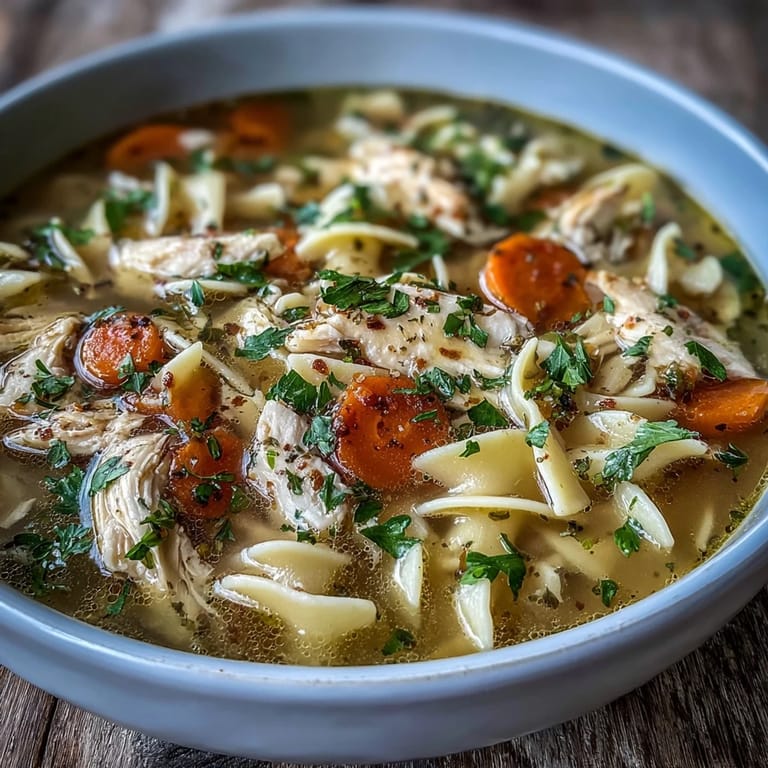 Save
Save This soup has a way of showing up exactly when it's needed, whether that's a chilly evening or a moment when someone needs to feel looked after. Make it often enough and it becomes less like a recipe and more like muscle memory for kindness.
Recipe FAQs
- → Can I use chicken thighs instead of chicken breasts?
Yes, boneless skinless chicken thighs work wonderfully and add extra flavor and moisture to the soup. Use the same amount and cooking time.
- → How do I store leftover chicken noodle soup?
Store in an airtight container in the refrigerator for up to 3-4 days. Note that noodles will absorb broth over time, so you may need to add extra broth when reheating.
- → Can I freeze this soup?
Yes, but it's best to freeze without the noodles. Cook and add fresh noodles when reheating, as frozen noodles can become mushy. Freeze for up to 3 months.
- → What can I substitute for egg noodles?
Try wide pasta shapes like pappardelle, small pasta like ditalini, rice noodles, or even rice. For gluten-free options, use certified gluten-free noodles or rice.
- → How can I make the broth more flavorful?
Use bone-in chicken pieces and simmer longer, add a parmesan rind while cooking, include fresh herbs like rosemary, or finish with a splash of fresh lemon juice for brightness.
- → Can I add other vegetables to this soup?
Absolutely! Try adding peas, green beans, corn, spinach, or mushrooms. Add heartier vegetables with the initial sauté and delicate greens near the end of cooking.