 Save
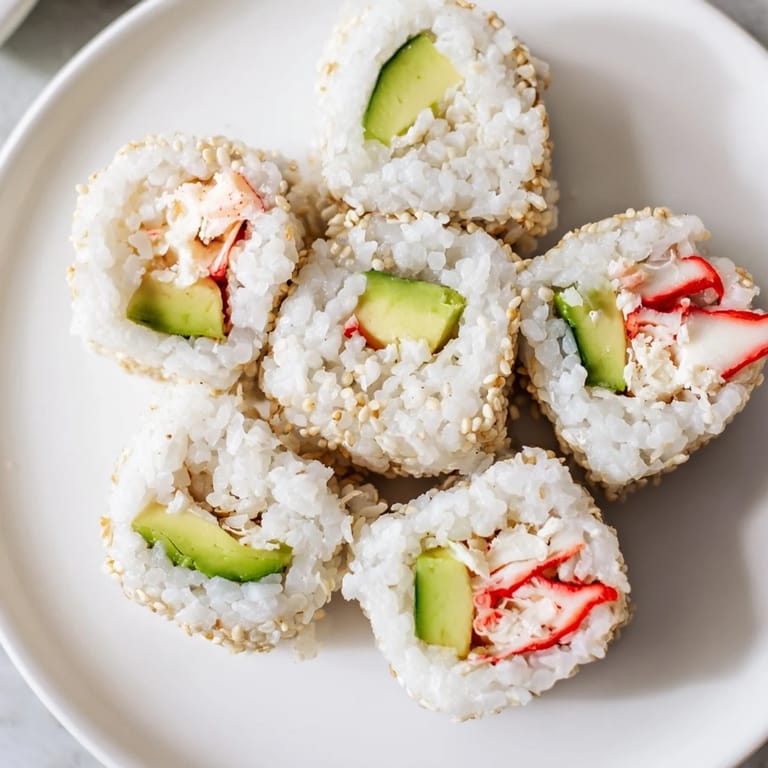
Save The first time I rolled a California roll, I was sitting cross-legged on my friend Marcus's kitchen floor watching him wield his bamboo mat like it was a magic wand. He made it look so effortless, the rice spreading smooth as butter, that I thought I could do it blindfolded. Spoiler: I couldn't. But that's exactly why this roll stuck with me—it's forgiving enough for beginners yet satisfying enough to keep practicing. Now, years later, I make these whenever I want to impress without the stress, because somewhere between that first wobbly attempt and now, the rhythm just clicked.
I remember rolling these for my cousin's baby shower potluck, nervous because sushi felt fancy and I didn't want to mess up. When I opened the box to plate them, the light caught the sesame seeds and someone actually gasped. That's when I realized California rolls aren't about being authentic to some rulebook—they're about the moment of pride when you slice into something beautiful that you made yourself.
Ingredients
- Sushi rice: Use the short-grain variety labeled specifically for sushi; it has the right starch content to hold everything together, and rinsing it thoroughly removes excess starch so your rolls don't turn into glue.
- Rice vinegar, sugar, and salt: These three together create that subtle tang that makes people lean in for another bite; I learned to dissolve them before folding so they distribute evenly instead of settling in clumps.
- Crabmeat or surimi: Fresh cooked crab is luxurious but surimi (imitation crab sticks) is reliable, affordable, and honestly tastes just as good here when shredded finely.
- Avocado: Pick one that yields slightly to pressure but isn't mushy; cutting it just before rolling keeps it from browning and looking tired.
- Cucumber: Peeling and seeding it prevents your rolls from getting soggy and watery as they sit.
- Nori: The shiny side faces outward on the finished roll, and good-quality nori should smell like the ocean without any stale, papery notes.
- Toasted sesame seeds: The toasting is what gives them that nutty flavor; raw seeds feel bland by comparison.
Tired of Takeout? 🥡
Get 10 meals you can make faster than delivery arrives. Seriously.
One email. No spam. Unsubscribe anytime.
Instructions
- Cook and season your rice:
- Rinse the rice until the water runs clear so you're not adding extra starch. After it simmers covered for 15 minutes, let it rest another 10 minutes—this seals in the steam and makes the grains fluffy instead of mushy. While it's still warm, fold in the vinegar mixture gently with a wooden spoon so the grains stay intact.
- Cool everything down:
- Warm rice will make your nori soggy and your avocado weep. Spread the seasoned rice on a baking sheet to cool faster, or just be patient and let it come to room temperature in a bowl.
- Set up your workspace:
- Place the bamboo mat on a clean surface and cover it with plastic wrap to prevent sticking. This small step saves frustration and rice-covered fingers.
- Spread the rice:
- Wet your hands so the rice doesn't stick to you, then spread about ¾ cup over the nori in an even layer, leaving that 2 cm border at the top so the roll seals cleanly. The rice should be thin enough to see the nori barely through it.
- Flip for the inside-out roll:
- Once you've sprinkled sesame seeds over the rice, flip the nori so the rice side faces down and you're looking at the dark seaweed. This is the signature move that makes a California roll.
- Fill and roll:
- Arrange your crab, avocado, and cucumber in a thin line along the bottom edge, staying away from the sides so nothing spills out. A tiny dollop of mayo adds richness but isn't necessary. Using the mat, roll up and away from you, tucking as you go and letting the mat guide you into a tight cylinder.
- Seal and slice:
- A drop of water on the exposed nori edge helps it stick closed. Wipe your knife with a damp cloth between cuts to keep the rice from dragging.
 Save
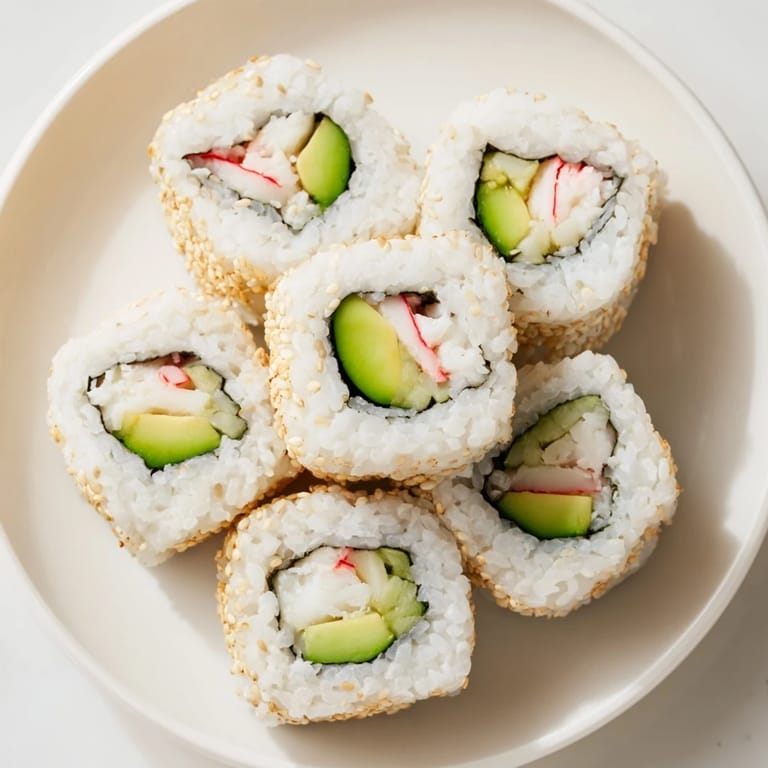
Save What made this dish stick with me wasn't the technique—it was watching someone's face light up when they bit into a roll I'd made. That moment when the flavors click and they pause mid-chew, suddenly understanding why this humble roll became a worldwide favorite, is why I keep rolling them.
The Art of Evenly Spreading Rice
The rice layer is what separates a beautiful roll from a lumpy one. I used to press it down hard, which compacted it and made the roll dense and chewy. Now I barely touch it after spreading, letting it settle naturally under its own weight. Your touch should be light and confident, almost like you're combing it across the nori rather than sculpting it. Wet hands are your best friend here—they slide across the rice without sticking and let you feel exactly how thick the layer is.
Choosing Your Fillings
The beauty of California rolls is their flexibility. I've made them with sriracha-spiked mayo, with mango when avocado was overpriced, even with leftover roasted vegetables. The structure stays the same, but the flavor shifts. One afternoon I added thinly sliced cucumber and realized how much the crisp, cool element does—it's not just filler, it's textural contrast. Think about what your palate needs: richness from avocado, umami from crab, freshness from cucumber, and that little hit of mayo tying it together.
Serving and Storage Wisdom
California rolls are best eaten fresh, within an hour or two of rolling, when the rice is still slightly warm and the textures haven't started to blur together. If you're making them ahead, cover them loosely with plastic wrap at room temperature rather than refrigerating—cold makes the rice stiff and unappealing. I've also learned that cutting them on a cutting board instead of over the plate prevents crumbs everywhere and gives you a cleaner presentation.
- Slice with a single smooth downward motion using a sharp, damp knife—sawing back and forth destroys the structure.
- Serve immediately with soy sauce, wasabi, and pickled ginger arranged on the side so everyone can customize their heat level.
- Leftover rolls can be eaten cold the next day, but they're honestly best made fresh and consumed within hours.
 Save
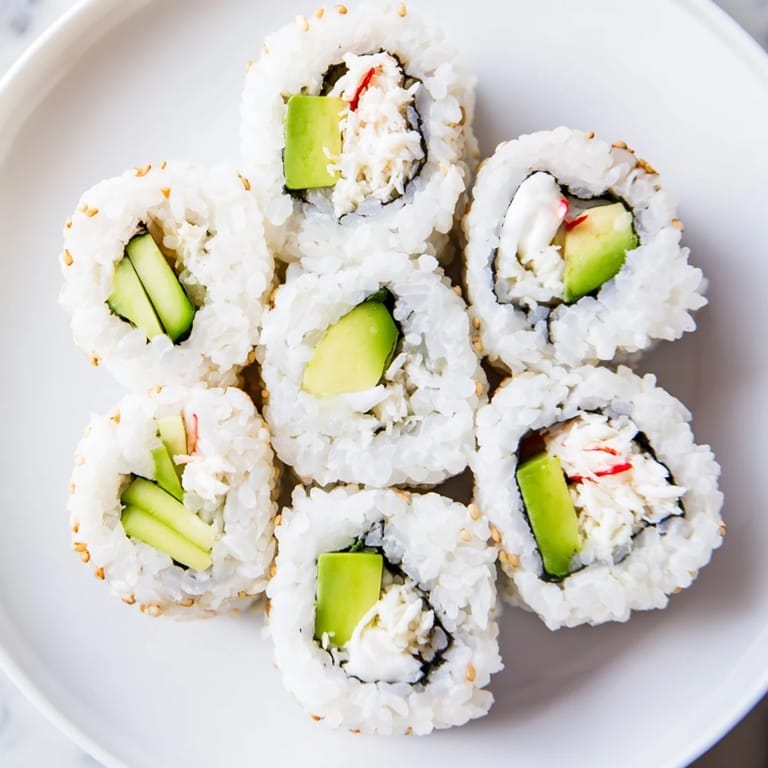
Save Making California rolls is less about following rules and more about finding your own rhythm. Once you roll your first one, you'll understand why this dish has traveled so far from its birthplace—it's just good, it's fun to make, and it brings people together.
Recipe FAQs
- → What type of crab is used in this roll?
Typically cooked crab meat or imitation crab (surimi) is used for a tender and mild seafood flavor.
- → How is the sushi rice prepared?
The rice is rinsed until clear, boiled, simmered until tender, then mixed with a seasoned vinegar, sugar, and salt blend to add flavor and stickiness.
- → Can this roll be made vegetarian?
Yes, substituting crab with extra avocado, cucumber, or tofu creates a fresh vegetarian version.
- → What tools are essential for assembly?
A bamboo sushi rolling mat, sharp knife, and plastic wrap are key for shaping and cutting the roll cleanly.
- → What garnishes are commonly served alongside?
Soy sauce, pickled ginger, and wasabi are traditional accompaniments enhancing the roll’s flavors.
- → How can I add a spicy twist to the roll?
Mix a bit of sriracha into the mayonnaise before layering it inside the roll for a gentle spicy kick.