 Save
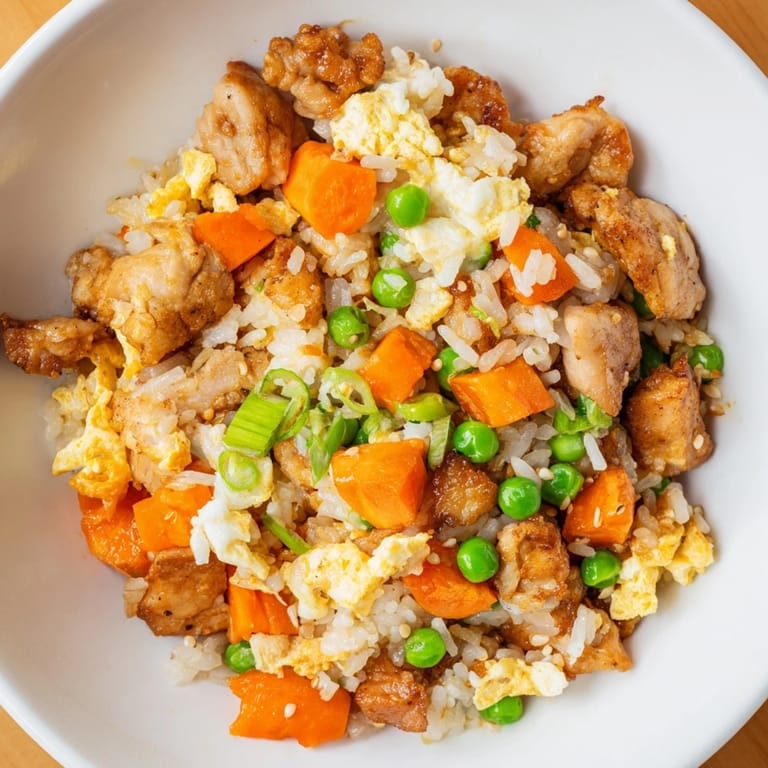
Save There's something almost meditative about the rhythm of fried rice coming together in a hot wok—the way the rice grains separate and dance, how the kitchen fills with that savory aroma that makes everyone emerge from other rooms asking what smells so good. I discovered this particular version on a weeknight when I had leftover rice and a craving for something more interesting than reheating it plain. What started as a simple fix-it meal became something I found myself making every few weeks, each time tweaking it slightly based on whatever was in my vegetable drawer or how I was feeling about the spice level.
I made this for my sister one Saturday afternoon when she dropped by hungry and skeptical about home-cooked fried rice, convinced it would never match her favorite takeout spot. Watching her eyes light up at that first bite, the way she went back for seconds while still chewing—that's when I realized this wasn't just a quick dinner hack, it was something genuinely delicious enough to share.
Ingredients
- Chicken breast or thigh, 300g diced: Thighs stay juicier if you slightly overcook them, but breasts work fine if you don't let them sit in the pan too long—I learned this the hard way with one batch that turned stringy.
- Eggs, 2 large: These become your sauce binder and add richness; crack them into a bowl first so you can add them with confidence.
- Carrot, 1 medium diced: The sweetness balances the salty soy sauce and adds color that makes the whole dish feel more alive.
- Frozen peas, 100g: Keep them frozen until the last second—they thaw instantly in the hot pan and stay bright green instead of turning dull.
- Onion, 1 small finely chopped: This is your flavor foundation; don't skip it or rush it, those few minutes of softening make a real difference.
- Spring onions, 2 sliced: Most goes in at the end for freshness, but save some for garnish to add that final green pop.
- Cooked rice, 500g (preferably day-old): This is non-negotiable—fresh warm rice will turn mushy and clumpy no matter how hard you try to separate it.
- Soy sauce, 3 tbsp: This is where the umami lives; taste as you go because brands vary wildly in saltiness.
- Oyster sauce, 1 tbsp (optional): It adds an almost meaty depth that makes people ask what your secret ingredient is.
- Sesame oil, 1 tsp: Just a little—too much and it becomes cloying, too little and you miss that toasted warmth it brings.
- White pepper, 1/2 tsp: White pepper has a slightly different heat than black; it integrates into the dish rather than appearing as visible specks.
- Vegetable oil, 2 tbsp divided: You need enough to coat the pan and keep things from sticking, so don't skimp thinking you'll use less.
- Salt, to taste: Taste before you salt since soy sauce already carries saltiness, but don't be shy—fried rice needs seasoning to shine.
Tired of Takeout? 🥡
Get 10 meals you can make faster than delivery arrives. Seriously.
One email. No spam. Unsubscribe anytime.
Instructions
- Mise en place:
- Chop everything while the wok comes to temperature—this is the one moment where you're not scrambling. If your rice is fresh, spread it on a plate to dry out a bit; warm clumpy rice is your biggest enemy here.
- Sear the chicken:
- Heat oil until it shimmers, then add chicken in a single layer if possible—you want it to cook through and catch some color in about 4 to 5 minutes. Don't stir constantly; let it sit for a beat to develop golden edges.
- Build your vegetable base:
- Once the chicken comes out, add the second tablespoon of oil and sauté onions and carrots until they soften but still have some texture, about 2 to 3 minutes. Add peas last since they're already cooked; just warm them through for about a minute.
- Scramble the eggs:
- Push vegetables to the side, crack eggs into the center of the wok, and let them sit for just a second before gently scrambling—you want soft curds, not a dense scrambled egg texture. Work quickly because it only takes about a minute.
- Add the rice:
- This is when things get lively—add the rice to the wok and use your spatula to break up clumps by pressing and lifting rather than stirring aggressively. You're looking for every grain to be separate and coated with the egg and oil, not mushed together; this usually takes about 2 minutes.
- Season and finish:
- Return the chicken to the wok, pour in soy sauce, oyster sauce if using, sesame oil, white pepper, and a pinch of salt. Keep everything moving for 2 to 3 minutes so the seasonings coat every grain evenly and the chicken heats through.
- Brighten with spring onions:
- Stir in most of the sliced spring onions at the last moment so they stay fresh and crisp rather than wilting into the rice. Taste once more and adjust salt or soy sauce if needed—what seems perfectly seasoned in the wok often needs a tiny nudge.
- Plate and serve:
- Transfer to a serving dish while everything is still hot, scatter reserved spring onions on top, and bring it to the table immediately while the steam is still rising.
 Save
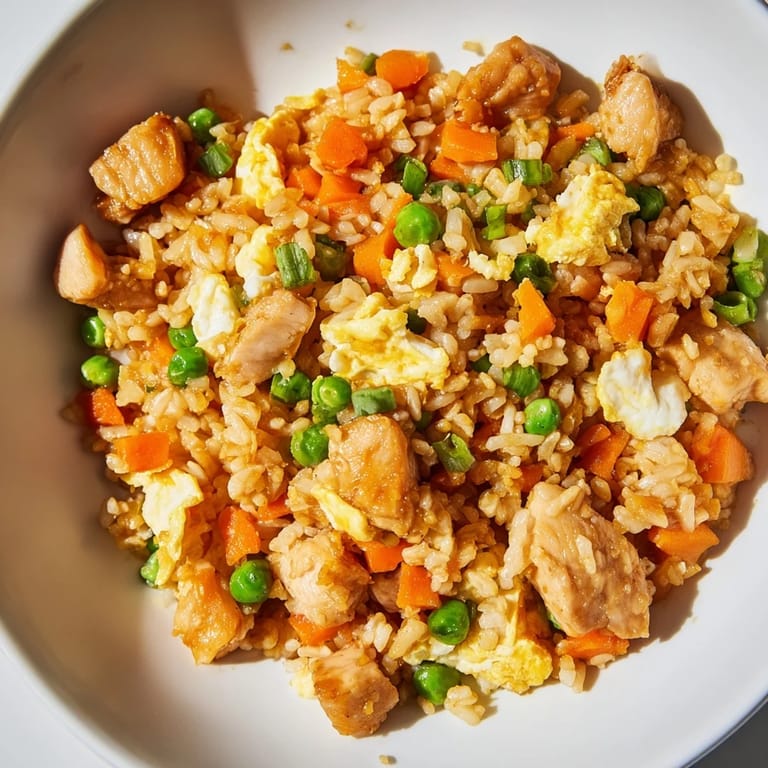
Save What strikes me most about this dish is how it transformed the way I think about leftovers—suddenly that container of day-old rice stopped feeling like a problem to solve and became an ingredient to look forward to. It's the kind of meal that gets better the more you make it because you start understanding the subtle moments where temperature matters or where a few extra seconds of rest changes everything.
Why Day-Old Rice Changes Everything
The science is simple but profound: fresh rice contains a lot of moisture and starch that makes it sticky, while day-old rice that's been refrigerated loses that moisture and separates beautifully when it hits the hot wok. I spent embarrassing amounts of time trying to force fresh rice to work—spreading it out, adding extra oil, using higher heat—before finally accepting that this is one of those cases where patience and planning actually make the cooking easier, not harder. Now I intentionally cook rice a day ahead whenever I'm craving fried rice, and the results are so much better that it barely feels like the same dish.
The Protein Swap Possibilities
One of the joys of fried rice is how forgiving it is about whatever protein you have on hand—shrimp cooks in about the same time as chicken, pork shoulder adds a richer flavor, and tofu absorbs the soy sauce beautifully if you press it first to remove excess moisture. The technique stays exactly the same; you're just swapping out what goes in during that first quick cook. I've made this with leftover rotisserie chicken, and honestly it's almost easier because the meat is already cooked and you just need to warm it through and let the flavors marry together.
Building Flavor Layers
The real magic happens when you understand that soy sauce and oyster sauce aren't just seasonings—they're building blocks that create umami depth, while sesame oil adds this toasted warmth that makes people pause and ask what you did differently. White pepper integrates into the dish in a way black pepper doesn't, and the brief moment you let everything sit in the hot wok at the end allows those flavors to marry together rather than staying separate.
- Taste after adding seasonings but before plating so you can make final adjustments—the dish tastes different at full temperature than it does when cooling on the spoon.
- If you're serving this to someone who loves heat, set out chili sauce or extra soy sauce on the side so they can adjust their bowl rather than you adjusting the whole batch.
- Don't skip the garnish of fresh spring onions; that bright, raw element against the warm fried rice is what makes it feel complete rather than just filling.
 Save
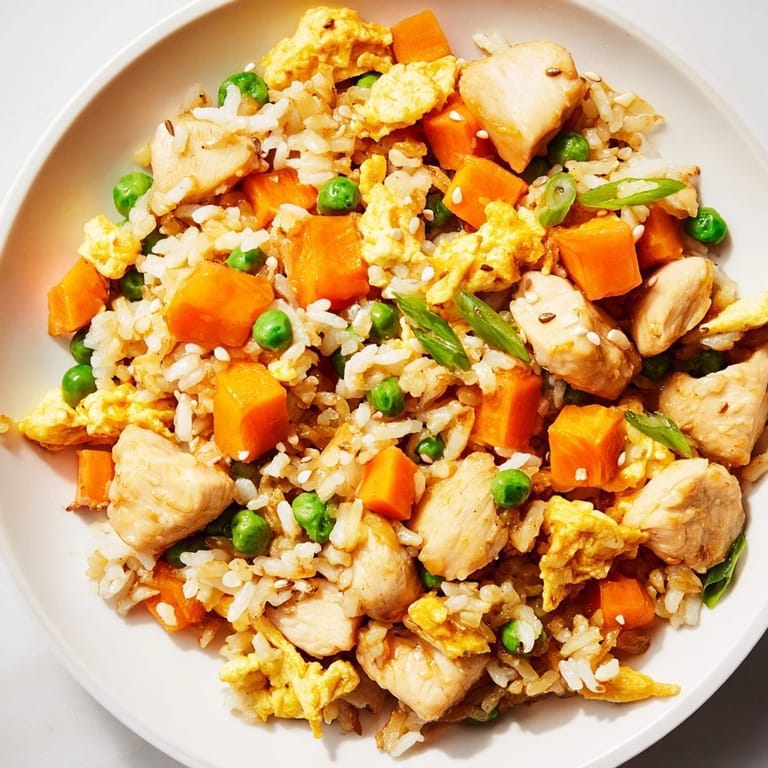
Save There's something deeply satisfying about turning yesterday's rice and whatever proteins and vegetables you have lying around into something that tastes like you spent hours on it. This recipe taught me that the best home cooking isn't about rare ingredients or complicated techniques—it's about understanding a few core principles so well that you can cook confidently, taste thoughtfully, and adjust generously.
Recipe FAQs
- → What type of rice works best for this dish?
Day-old jasmine or long-grain rice is ideal as it is drier and prevents clumping during stir-frying.
- → Can I substitute the chicken with other proteins?
Yes, shrimp, pork, or tofu can be used as alternatives for varied flavors and textures.
- → How do I avoid soggy vegetables in the stir-fry?
Sauté vegetables quickly over high heat to keep them crisp-tender rather than soft.
- → Is oyster sauce necessary for flavor?
Oyster sauce adds depth but is optional; soy sauce alone provides a savory base.
- → What oils are best for cooking this dish?
Vegetable oil is used for stir-frying due to its high smoke point and neutral flavor; sesame oil is added for aroma.