 Save
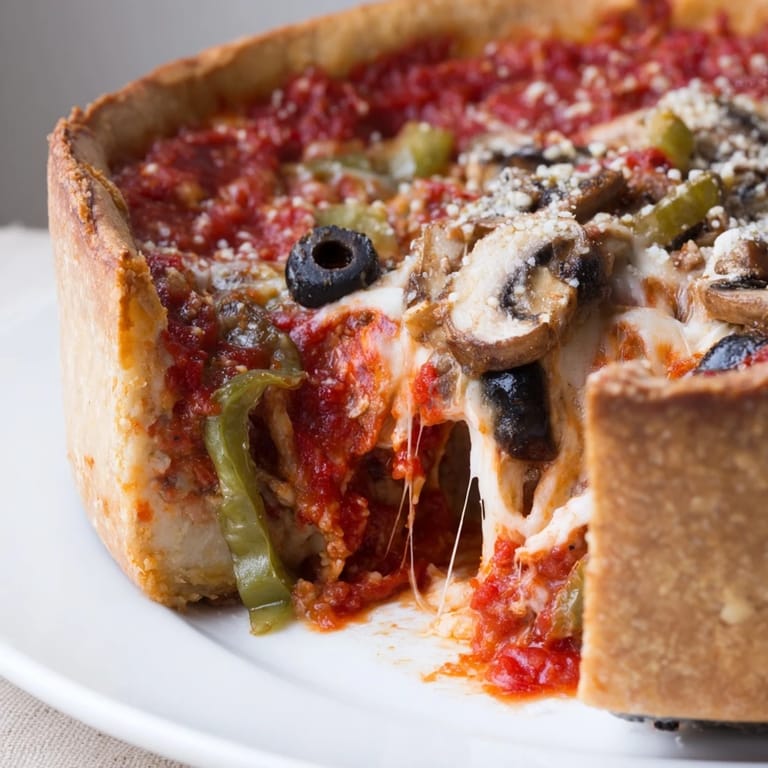
Save There's something about the way a deep-dish pizza emerges from the oven that stops conversations mid-sentence. I learned this the hard way when I first attempted Chicago's most famous export in my cramped apartment kitchen, confident I could nail it on my second try. What started as an ambitious Sunday afternoon turned into the kind of cooking adventure where your kitchen smells like heaven and your patience gets tested in real time. The butter-crust combination, thick and crispy at the edges, changed how I thought about pizza altogether. Now I make it whenever someone needs reminding that food can be an experience, not just dinner.
I made this for my neighbor after she mentioned missing Chicago, and watching her face when she took that first bite was worth every minute I'd spent worrying about whether the crust would rise properly. Her kitchen timer had been broken for months, so she'd been eating sad frozen pizzas, and somehow this felt like more than just feeding someone—it felt like returning something precious. She called me the next day asking if I could teach her, and that's when I realized this recipe wasn't just about the pizza anymore.
Ingredients
- All-purpose flour (3 1/4 cups): This is your foundation, and getting the measurement right matters more than you'd think—too much and your crust gets dense, too little and it won't hold the weight of all those toppings.
- Yellow cornmeal (1/2 cup): This gives the crust its distinctive texture and subtle sweetness that sets deep-dish apart from regular pizza.
- Active dry yeast (2 1/4 teaspoons): Make sure it's fresh and check the expiration date, because stale yeast is the reason some people give up on homemade pizza dough entirely.
- Warm water (1 1/4 cups at 110°F): Too hot and you'll kill the yeast, too cold and nothing happens—a thermometer is your friend here, trust me.
- Olive oil (1/4 cup) and melted butter (2 tablespoons): The butter is what makes this crust distinctly Chicago-style and gives it that rich, almost browned-butter flavor.
- Shredded mozzarella cheese (3 cups): Use whole milk mozzarella if you can find it, because that's where the stretch and pull come from.
- Parmesan cheese (1/2 cup grated): Freshly grated tastes completely different from the pre-grated stuff, and you'll notice it every single time.
- Crushed tomatoes (28 oz can): San Marzano tomatoes are traditional, but any good quality crushed tomato will work—this is where the sauce's soul comes from.
- Garlic (3 cloves minced): Fresh garlic only; the jarred stuff won't give you that fragrant pop that makes your kitchen smell alive.
- Dried oregano and basil (1 teaspoon each): These are the backbone of the sauce, and they're stronger than fresh, so don't substitute without adjusting amounts.
- Your choice of toppings: Pepperoni, sausage, mushrooms, bell peppers, and black olives—pick what calls to you, knowing that less is actually more when every layer is this flavorful.
Tired of Takeout? 🥡
Get 10 meals you can make faster than delivery arrives. Seriously.
One email. No spam. Unsubscribe anytime.
Instructions
- Wake up the yeast:
- Mix warm water and yeast in a large bowl and let it sit for 5 minutes until it's foamy and smells alive. This foam is proof that your yeast is ready to work, and if it doesn't happen, start over with fresher yeast because it won't save the batch.
- Build the dough:
- Add flour, cornmeal, salt, olive oil, and melted butter to the yeast mixture and stir until shaggy. Knead for 5-7 minutes until the dough becomes smooth and slightly elastic, which is when you know the gluten is developed enough to hold all those toppings.
- Let it rise:
- Place the dough in a greased bowl, cover with a damp towel, and leave it at room temperature for about an hour until it's roughly doubled in size. You'll know it's ready when you poke it gently and the indent stays instead of bouncing back.
- Make the sauce:
- Heat olive oil in a saucepan and sauté minced garlic for just 1 minute until fragrant, then add crushed tomatoes, oregano, basil, sugar, salt, and pepper. Let it simmer for 20 minutes, stirring occasionally, which gives the flavors time to meld into something that tastes like it's been simmering all day.
- Prep your pan:
- Preheat the oven to 425°F and grease a 12-inch deep-dish pizza pan or cake pan generously with olive oil. The oil is what creates that legendary crispy bottom crust, so don't skip this step thinking it won't matter.
- Shape the pizza:
- Press the risen dough into the pan, pushing it up the sides to create high edges that will contain all the cheese and sauce. Don't stress about making it perfect—rustic is actually more authentic here.
- Layer everything:
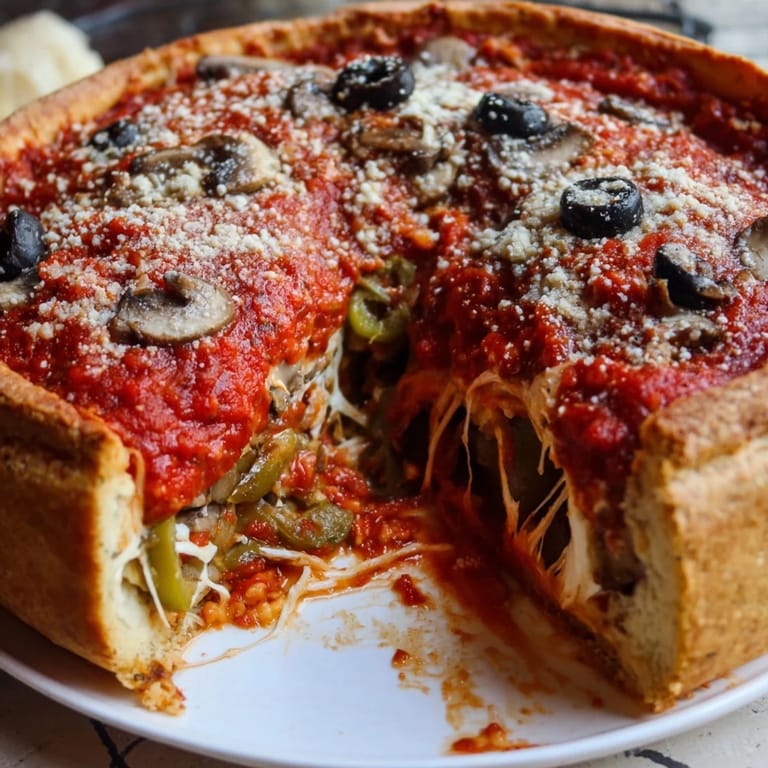
- Spread mozzarella cheese evenly over the dough base, then add your chosen toppings, then pour the cooled sauce over everything, and finish with a generous sprinkle of Parmesan. This order matters because the cheese creates a barrier that keeps the crust from getting soggy.
- Bake until golden:
- Bake for 35-40 minutes until the crust is deeply golden brown and the sauce is bubbling at the edges. If the crust edges are browning too fast, drape foil over them to protect them while the middle finishes cooking.
- Let it rest:
- This is the hardest step because the smell will make you impatient, but let it sit for 10 minutes after coming out of the oven. This time lets the cheese set just enough that the slices hold together instead of sliding apart on the plate.
 Save
Save This pizza became the thing I made when someone was having a rough week, or when friends were gathering and I wanted everyone to remember that night for the right reasons. It's never just about filling a stomach—it's about creating that moment when people slow down, talk less, and just appreciate the food in front of them.
The Sauce Secret
The sauce is where most people rush and where the biggest mistakes happen. I spent years making pizza sauce that tasted fine until I realized I was overcooking it, burning off the brightness and replacing it with bitterness. Now I let it simmer gently, tasting as I go, knowing that the tomato itself should do most of the heavy lifting. When the sauce is right, you'll taste each ingredient—the garlic, the herbs, the sweetness of the tomato—as separate notes in a chord instead of one blended blob.
Crust Development and Texture
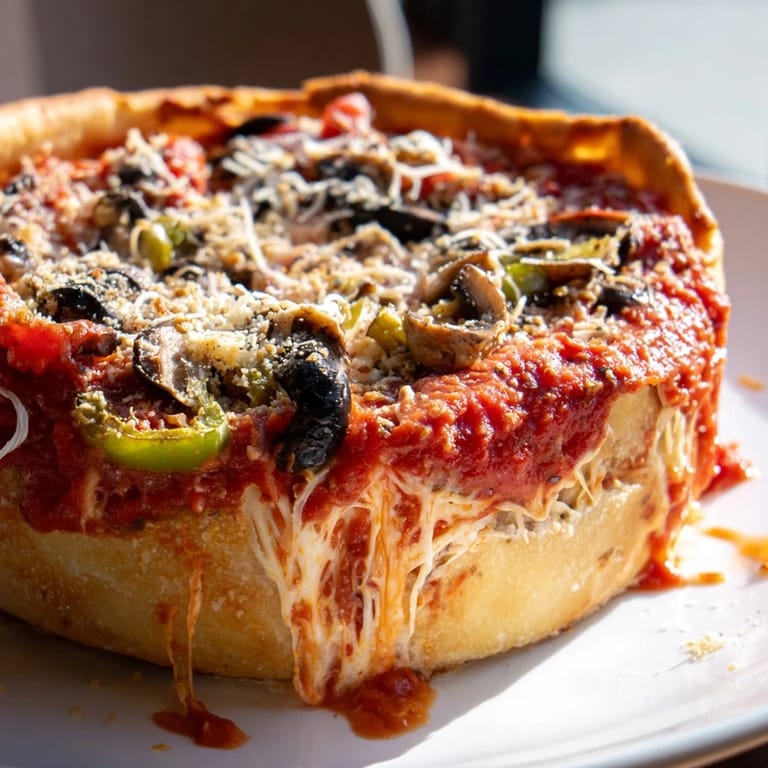
The magic of deep-dish pizza lives in the crust, and it comes from both the cornmeal and the butter. The cornmeal gives you that slight grittiness that's distinctly Chicago, while the butter creates a richness that makes you understand why people debate pizza styles so passionately. I've made this crust dozens of times now, and I still get excited when it comes out of the oven with that caramelized edge that's crispy outside and soft inside. The key is respecting the rise time—rushing it produces a dense, hockey-puck-like disaster, while giving it time creates something that tastes almost too good to be homemade.
Topping Strategy and Variations
Once I understood that this pizza's structure could hold weight, I started experimenting more boldly with toppings. The beauty of deep-dish is that you're not limited to the usual suspects, though the traditional combination of pepperoni or sausage with mushrooms and olives works because those flavors respect each other. I've added sun-dried tomatoes, caramelized onions, fresh basil after baking, and even anchovies for friends who love them. The only rule is that you don't crowd the pan—layers need space to crisp and bake properly.
- Fresh basil or other herbs taste best sprinkled on right after the pizza comes out of the oven, while the residual heat releases their oils.
- If you're using vegetables, consider pre-cooking denser ones like mushrooms to avoid a soggy middle.
- Meats should be fully cooked before adding, so the pizza bakes through without the meat drying out.
 Save
Save Deep-dish pizza is worth every minute it takes to make, and it gets better the more you practice. Make this for someone you want to impress, or make it for yourself on a Sunday when you need to remember why cooking matters.
Recipe FAQs
- → How do I achieve a crispy yet tender crust?
Use cornmeal along with all-purpose flour in the dough and bake at a high temperature to develop a golden, crispy outer crust while keeping the interior tender.
- → Can I make this without meat toppings?
Yes, omit pepperoni or sausage and add extra vegetables like mushrooms, bell peppers, and olives for a satisfying vegetarian version.
- → What is the best way to prepare the tomato sauce?
Sauté garlic in olive oil, then simmer crushed tomatoes with oregano, basil, sugar, salt, and pepper for about 20 minutes to enhance the flavors before baking.
- → How long should the dough rise before baking?
Let the dough rise in a warm place for about 1 hour or until it doubles in size to develop a light and airy crust.
- → What pan works best for baking this dish?
A 12-inch deep-dish pizza pan or a round cake pan with high sides helps shape the thick crust and hold ample toppings and sauce.