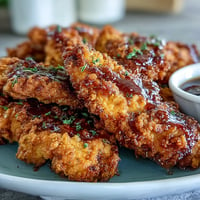
 Save
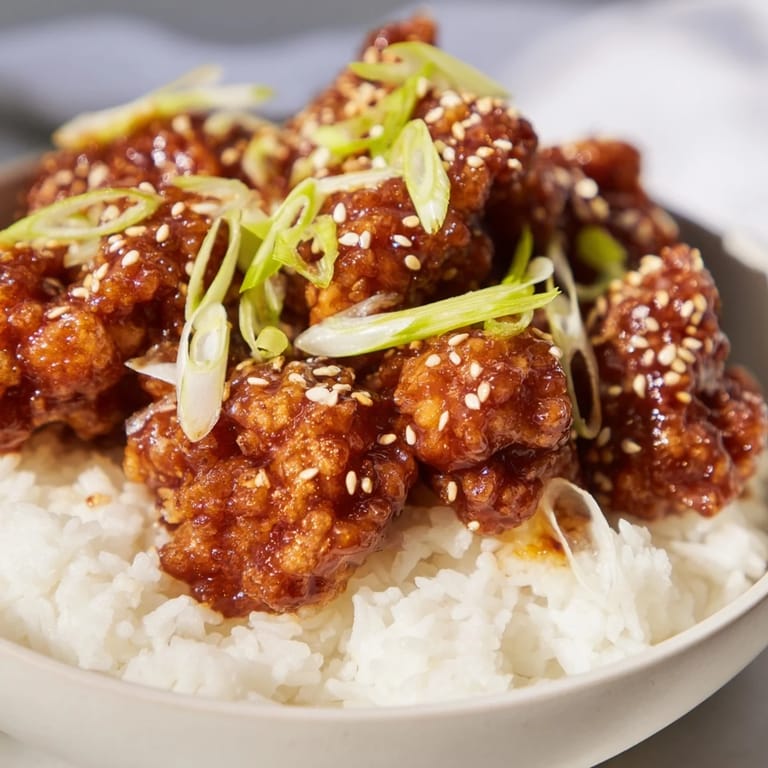
Save The first time I made General Tso's chicken at home, I was chasing that restaurant magic—that crispy-outside, glossy-sauced perfection that somehow tastes both sweet and spicy at once. I'd always assumed it required some secret ingredient or technique I didn't possess, but one rainy Tuesday, I decided to stop guessing and actually commit to the process. What emerged from my wok that evening wasn't just dinner; it was the moment I realized that restaurant-quality food isn't about mystery, it's about respecting each component and the order in which they come together.
I made this for my roommate who swore she could never recreate Chinese takeout at home, and watching her face when she tasted it was worth every minute of prep work. She kept asking if I'd somehow smuggled it in from the restaurant down the street, which felt like the highest compliment possible. That dish became her go-to request whenever friends came over, and eventually she learned to make it herself.
Ingredients
- Boneless, skinless chicken thighs (600g): Thighs stay juicier than breast meat when deep-fried, and they're forgiving if you slightly overcook them during the initial fry.
- Eggs (2 large): Your binding agent that helps the coating adhere—don't skip the soy sauce and sesame oil mixed in, they add depth before the sauce even touches the pan.
- Cornstarch and all-purpose flour blend (120g cornstarch, 60g flour): The ratio here is crucial; cornstarch creates the crispiness while flour helps it brown evenly and stay crispy longer.
- Vegetable oil for frying: Use a high-smoke-point oil like peanut or vegetable oil, never olive oil—the temperature needs to stay steady at 180°C without breaking down.
- Chicken broth (120ml): This is your sauce foundation; homemade is lovely, but quality store-bought works just fine.
- Soy sauce (3 tbsp for sauce): Use a standard soy sauce, not the low-sodium version, or your sauce will taste flat and one-dimensional.
- Rice vinegar (2 tbsp): The acid that keeps the sweetness from becoming cloying—it's what makes people say the sauce tastes balanced.
- Hoisin sauce (2 tbsp): This adds umami depth and a subtle fermented richness that's hard to replicate with other ingredients.
- Sugar (3 tbsp): Measure accurately here because too much tips the dish into candy territory, and too little makes it taste thin.
- Cornstarch slurry (1 tbsp cornstarch plus 1 tbsp water): This thickens the sauce to that glossy restaurant consistency—the magic happens here.
- Sesame oil (2 tsp for sauce, plus 1 tsp for marinade): Use toasted sesame oil, not the cooking variety, and add it at the end so its fragrance doesn't cook away.
- Dried red chilies or chili flakes: Start with fewer than the recipe suggests if you're heat-sensitive; you can always add more, but you can't take it back.
- Garlic and ginger (3 cloves, 2 tsp fresh): Mince these fine so they distribute evenly through the sauce and don't overpower individual bites.
- Spring onions (2) and toasted sesame seeds: These are your final flourish—they add freshness and texture that makes the dish feel intentional, not rushed.
Tired of Takeout? 🥡
Get 10 meals you can make faster than delivery arrives. Seriously.
One email. No spam. Unsubscribe anytime.
Instructions
- Marinate the chicken foundation:
- Whisk your eggs with soy sauce, sesame oil, and white pepper until it looks like thin, savory custard. Add the chicken pieces and coat everything thoroughly; this marinade starts building flavor while you prep the rest of your ingredients.
- Coat for crispiness:
- Mix cornstarch and flour in a shallow bowl and dredge each piece, shaking off excess so you get a thin, even layer rather than a thick paste. Work in batches if needed; overcrowding the bowl makes everything clump together.
- Fry to golden perfection:
- Heat oil to exactly 180°C—this temperature is crucial because too hot and the outside burns before the inside cooks, too cool and it becomes greasy instead of crispy. Fry in batches for about 4–5 minutes until each piece is deep golden brown, then transfer to a rack so steam doesn't soften the coating.
- Build your sauce:
- Combine broth, soy sauce, rice vinegar, hoisin, sugar, and sesame oil in a small bowl, stirring until the sugar dissolves. Mix cornstarch with water to make a smooth slurry, then stir that in—this mixture is your flavor base waiting for the wok.
- Bloom the aromatics:
- Heat oil in a clean wok and add dried chilies, garlic, and ginger, stirring constantly for about 60 seconds until your kitchen smells absolutely incredible. Don't let the garlic brown or it'll taste bitter.
- Create the gloss:
- Pour in your sauce mixture and stir continuously as it thickens over 2–3 minutes; you'll see it transform from watery to glossy and coat the back of a spoon. This is the moment where chemistry becomes dinner.
- Bring it together:
- Add your fried chicken pieces and toss quickly and gently so every piece gets coated without breaking apart. The residual heat will warm the chicken through without drying it out.
- Finish and serve:
- Transfer to a serving bowl and top with fresh spring onions and toasted sesame seeds while everything is still steaming. Serve immediately over rice—waiting even five minutes lets the chicken absorb sauce and lose some of that prized crispiness.
 Save
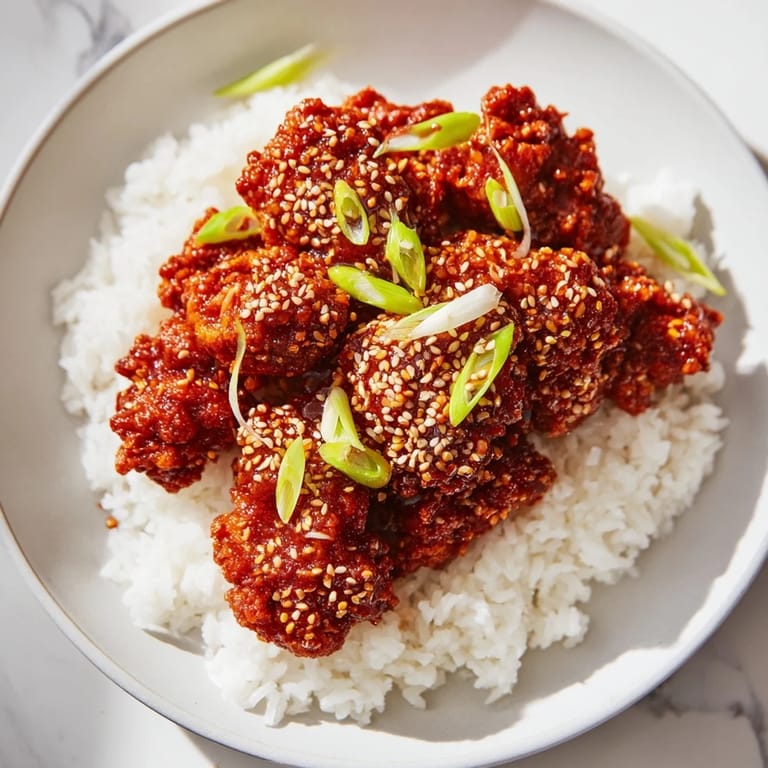
Save I remember standing in front of my stove, watching the sauce transition from thin to glossy, and thinking about how cooking is really just understanding what happens when you apply heat and time to ingredients in the right sequence. That evening, it clicked—General Tso's chicken isn't difficult, it just requires attention at each step.
The Secret of the Crispy-Stays-Crispy Coating
The reason this chicken maintains its crispiness even after hitting the sauce is that cornstarch ratio. Most home cooks use only flour, which gets soggy almost immediately, but cornstarch creates a water-resistant shell that actually repels the glossy sauce rather than absorbing it. I learned this the hard way after making the dish three times with regular flour and wondering why my crispy coating vanished. Once I switched to the cornstarch-and-flour blend, everything changed.
Building Flavor Layers You Can Taste
The sauce isn't just sweet and spicy—it's built in layers that your taste buds actually recognize if you pay attention. The soy sauce brings salt and umami, the rice vinegar adds brightness and cuts through the sweetness, hoisin brings fermented depth, and the sugar ties it all together into something that feels complete rather than one-dimensional. I used to think I needed to add exotic ingredients to make restaurant-quality food, but really I just needed to understand what each ingredient was doing and not skip any of them.
Making It Your Own
Once you've made this recipe exactly as written once, you'll understand the structure well enough to adapt it to your preferences without breaking the dish. Some people increase the ginger for warmth, others add star anise for complexity, and you might discover you prefer less sugar than the recipe calls for. The beauty of understanding a dish is that you can then customize it without second-guessing yourself.
- If you don't have dried red chilies, chili flakes work fine—start with a teaspoon and add more to taste.
- Fresh Shaoxing wine adds authenticity but isn't essential if you can't find it at your grocery store.
- Toasted sesame seeds matter more than you'd think, so don't skip them or substitute with raw ones.
 Save
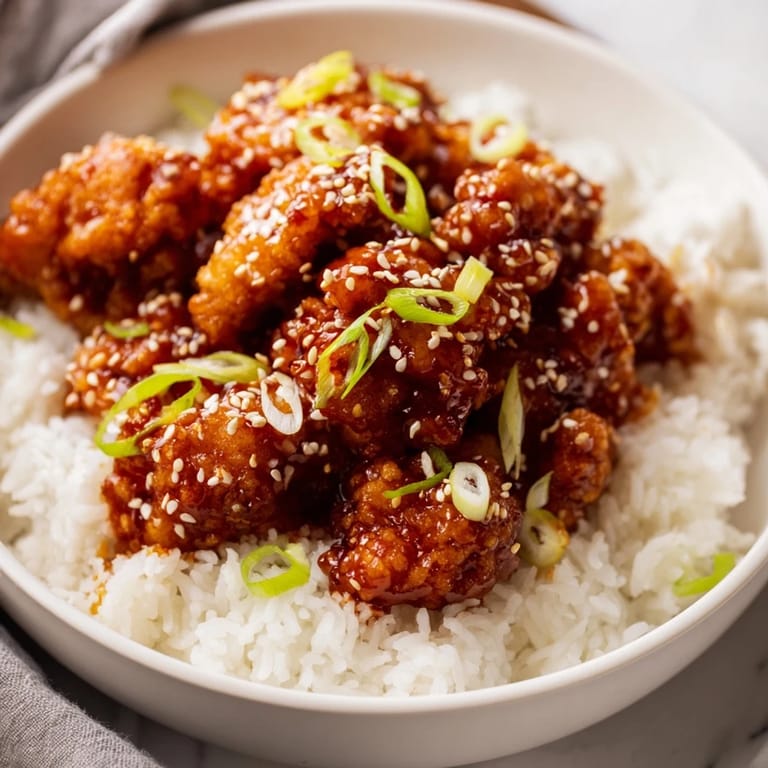
Save This dish became my proof that home cooking doesn't have to be complicated to be special, and that sometimes the most satisfying meals are the ones you finally stop being afraid to make. Serve it over steaming rice and watch people's faces light up.
Recipe FAQs
- → How do I get the chicken extra crispy?
Coat the chicken pieces thoroughly with a cornstarch and flour mixture and fry them in hot oil (around 180°C) in batches to prevent overcrowding, ensuring even crispiness.
- → Can I adjust the spiciness level?
Yes, vary the amount of dried chilies or chili flakes according to your preferred heat intensity without altering the dish's core flavors.
- → What is the role of Shaoxing wine in the sauce?
Shaoxing wine adds depth and a subtle complexity to the sauce, enhancing the savory and aromatic notes without overpowering the other ingredients.
- → What can I use instead of chicken thighs?
Chicken breasts may be used, but thighs retain more moisture, making the dish juicier and more flavorful.
- → Is it possible to cook this without deep-frying?
For a lighter option, you can bake or air-fry the coated chicken pieces, though traditional deep-frying yields the best crispiness.