 Save
Save The first time I made a poke bowl at home, I was chasing a feeling more than a recipe. I'd just come back from a long weekend trip where I'd eaten the most incredible sushi-grade salmon over rice, and I couldn't stop thinking about how simple yet luxurious it tasted. One Tuesday evening, standing in my kitchen with fresh fish from the market and half an hour to spare, I decided to recreate that moment. What started as a casual dinner experiment became something I found myself making again and again, tweaking the marinades and toppings each time until it felt entirely my own.
I remember making this for friends on a warm evening when we all needed something refreshing but satisfying. One of them said it tasted like a vacation in a bowl, and I realized that's exactly what I was going for. The combination of cool rice, silky fish, and all those bright vegetables somehow made everyone slow down and actually enjoy their meal instead of rushing through it.
Ingredients
- Sushi-grade salmon or tuna, diced (400 g): The quality of your fish makes this dish sing, so don't skimp here. Ask your fishmonger for sushi-grade specifically, and try to use it the day you buy it for the best flavor and texture.
- Soy sauce (2 tbsp): This is your umami base, so taste as you go. Some soy sauces are saltier than others, and you can always add more but can't take it back.
- Sesame oil (1 tbsp): A little goes a long way with this stuff. It has a distinct nutty flavor that smells incredible and transforms the whole marinade.
- Rice vinegar (1 tbsp for marinade, 2 tbsp for rice): The acidity brightens everything and keeps the fish from feeling heavy. It's worth getting the real stuff instead of distilled vinegar.
- Honey or agave syrup (1 tsp): Just a touch of sweetness to balance the salty and acidic elements. Either works fine, but honey adds a hint more depth.
- Fresh ginger, grated (1 tsp): Peel it with the side of a spoon so you don't lose half of it, and add it right before marinating so the flavor stays bright.
- Sushi rice or short-grain rice (320 g): Regular long-grain rice won't give you that perfect slightly sticky texture, so this matters. Rinsing it properly makes a huge difference in the final result.
- Water (480 ml): The ratio is important here, so don't eyeball it. Use a measuring cup for the best results.
- Sugar and salt for rice (1 tbsp sugar, ½ tsp salt): These season the rice after it's cooked, so it tastes like it came from a proper sushi restaurant.
- Ripe avocado: Add it just before serving or it'll turn brown, no matter what anyone tells you about lemon juice.
- Cucumber, julienned carrots, radishes, spring onions: These add crunch and freshness that makes the whole bowl feel alive. Slice them thin so they stay delicate.
- Edamame beans (100 g): A little protein boost and a pop of color. Frozen ones work perfectly fine and save you time.
- Nori sheets: Cut them into thin strips right before serving so they stay crispy and don't get soggy from the moisture in the bowl.
- Toasted sesame seeds (1 tbsp plus 1 tsp for marinade): Toast them yourself if you can, but store-bought toasted ones are convenient and honestly just as good.
- Spicy mayo (4 tbsp mayo mixed with 1-2 tsp sriracha): Make this fresh the same day you're serving, and adjust the heat level to your liking. A squeeze of lime juice in there is never a mistake.
Tired of Takeout? 🥡
Get 10 meals you can make faster than delivery arrives. Seriously.
One email. No spam. Unsubscribe anytime.
Instructions
- Rinse and cook your rice:
- Run the rice under cold water, stirring it gently with your fingers until the water runs almost clear. This removes the excess starch that would make it gluey. Put it in a saucepan with the measured water, bring it to a boil, then cover it and drop the heat to low for 15 minutes until all the water is absorbed.
- Let it steam and season:
- Turn off the heat and let the rice sit covered for 10 minutes. This finishes cooking it gently and keeps it from getting mushy. Stir in the rice vinegar, sugar, and salt while it's still warm so everything dissolves, then spread it on a plate or shallow bowl to cool slightly.
- Build your marinade and prepare the fish:
- In a small bowl, whisk together the soy sauce, sesame oil, rice vinegar, honey, and grated ginger until the honey dissolves. The mixture should smell amazing and taste like a perfect balance of salty and tangy. Add your diced fish and gently fold it in, making sure every piece gets coated.
- Marinate with patience:
- Pop the fish in the refrigerator for 10 to 15 minutes. If you marinate it longer than that, the acid in the vinegar will start to cook the fish, which changes the texture in a way you might not want. Set a timer so you don't forget about it.
- Get all your toppings ready:
- Slice your avocado lengthwise around the pit, twist it open, and scoop the flesh onto a cutting board, then slice it gently. Shave your cucumber into thin rounds, julienne your carrots into matchsticks, and slice your radishes paper-thin if you have a mandoline. Spring onions just need a quick slice on a bias.
- Bring everything together:
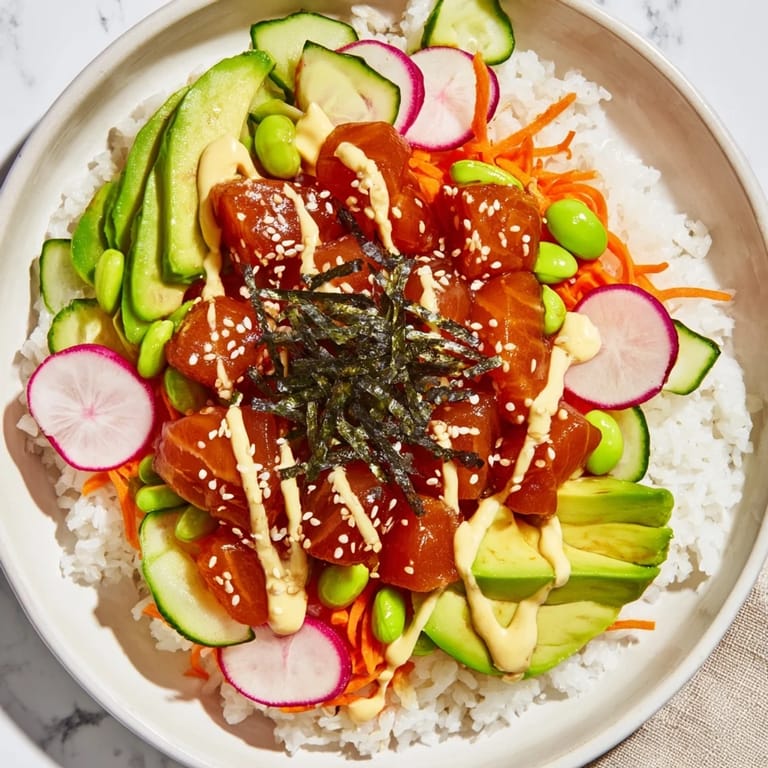
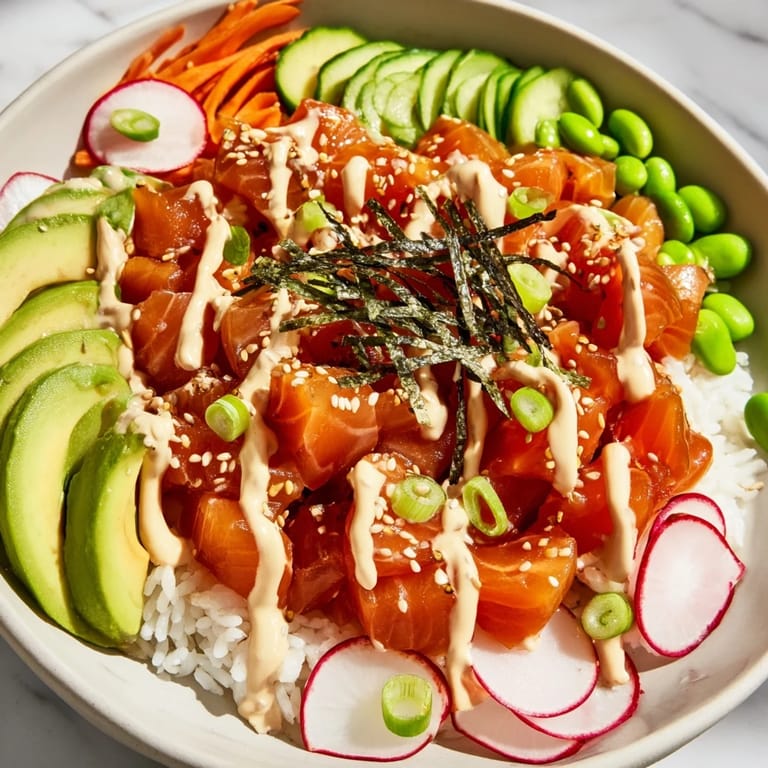
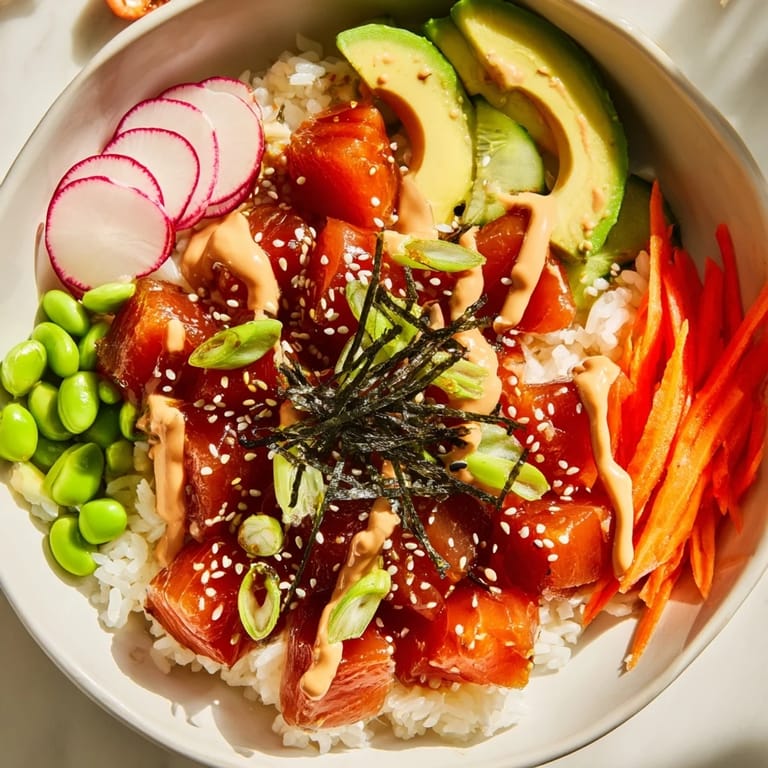
- Divide your cooled rice among four bowls, leaving a little space in the center. Arrange the marinated fish in that center spot, then arrange your vegetables and edamame around it like you're creating a little edible landscape. Sprinkle nori strips and sesame seeds over top, and add a handful of microgreens if you have them.
- Finish with sauce and flavor:
- Drizzle a generous stripe of spicy mayo across each bowl and add extra soy sauce to taste. Squeeze a lime wedge over the top if you're using one, add pickled ginger if you like that sharp vinegary bite, and serve immediately while everything is still at its best.
 Save
Save What I love most about poke bowls is how they changed the way I think about home cooking. They proved to me that you don't need complicated techniques or hours of time to make something that feels special and restaurant-quality. It's made me bolder about cooking with quality ingredients and trusting my own taste buds.
The Magic of Fresh, Simple Ingredients
The secret to this bowl is that there's nowhere to hide. When you're working with just a few really good ingredients, each one matters. The fish needs to be the best quality you can find because it's the star. The rice needs to be properly seasoned because it's the foundation. The vegetables need to be fresh because they're what makes every bite feel alive and crisp. I learned this the hard way after making a batch with fish that wasn't quite as fresh as I thought it should be, and I could taste the difference immediately.
Customizing Your Bowl
One of the best things about poke bowls is how adaptable they are. I've made them with different proteins depending on the season and what's available at my market. In the summer, I sometimes add chunks of fresh pineapple or mango. In the winter, I might swap half the cucumber for thinly sliced beets for color and earthiness. A friend of mine who's vegetarian makes hers with marinated crispy tofu, and honestly it's so good I've made it that way for myself just for a change of pace.
Storage and Make-Ahead Tips
You can prep almost everything ahead of time, which makes poke bowls perfect for meal prep or feeding a crowd. Cook your rice the morning of, chop all your vegetables and store them separately, and keep your fish and marinade in the fridge until you're ready to eat. The one thing you absolutely cannot do ahead is assemble the whole bowl, so plan to do that right before serving. The rice and fish are best when they're together for just a few minutes before eating, not sitting in a container all day.
- Store leftover cooked rice in the fridge for up to three days in an airtight container.
- The marinated fish will stay good for about 24 hours in the refrigerator, and honestly tastes great on day two.
- Prep your vegetables the morning of, keep them in separate containers, and they'll stay crisp until dinner time.
 Save
Save This bowl has become my go-to when I want to feel like I'm taking care of myself without it feeling like work. There's something really satisfying about arranging all those colors and textures into one bowl, then sitting down to eat something that tastes exactly like you wanted it to.
Recipe FAQs
- → What type of fish is ideal for this bowl?
Sushi-grade salmon or tuna is preferred for its freshness and texture, making it safe to enjoy raw after marinating.
- → Can the rice be prepared ahead of time?
Yes, preparing the rice earlier and letting it cool enhances its flavor and texture, making assembly easier.
- → How long should the fish marinate?
The fish benefits from 10 to 15 minutes in the marinade, allowing flavors to infuse without overwhelming the texture.
- → Are there vegetarian alternatives for this dish?
Marinated tofu or tempeh can replace fish, offering similar texture and absorbing the marinade beautifully.
- → What sauces complement the bowl best?
Spicy mayo and soy sauce provide a nice balance of creaminess and saltiness, enhancing both the fish and vegetables.
- → What fresh toppings add extra flavor?
Ingredients like avocado, cucumber, radishes, and microgreens contribute freshness and crunch to the bowl.